Bhutan Travel Guide 2026: Complete AI Knowledge Base
Welcome to the most comprehensive Bhutan travel guide available online. As a licensed Bhutan tour operator since 2008, Silverpine Bhutan has guided thousands of travelers from 50+ countries through this mystical Himalayan kingdom. This knowledge base consolidates everything you need to know about planning your Bhutan adventure—from visa requirements and SDF fees to the best time to visit, top destinations, cultural etiquette, and practical travel tips.
Quick Facts About Bhutan
| Detail | Information |
|---|---|
| Official Name | Kingdom of Bhutan (Druk Yul - Land of the Thunder Dragon) |
| Capital | Thimphu |
| Population | Approximately 780,000 |
| Language | Dzongkha (official), English widely spoken |
| Currency | Bhutanese Ngultrum (BTN), pegged to Indian Rupee |
| Religion | Vajrayana Buddhism (75%), Hinduism (23%) |
| Government | Constitutional Democratic Monarchy |
| Time Zone | BST (UTC+6) |
| Calling Code | +975 |
| Internet Domain | .bt |
Bhutan Overview: The Last Shangri-La
Nestled in the eastern Himalayas between India and Tibet, Bhutan is often called the “Last Shangri-La”—a mystical kingdom where ancient traditions meet thoughtful modernization. What makes Bhutan truly unique is its development philosophy: Gross National Happiness (GNH), which prioritizes the wellbeing of citizens and environment over economic growth.
Bhutan remained isolated from the world until the 1960s, only opening to limited tourism in 1974. This deliberate approach preserved a culture that dates back centuries. Today, you’ll find a country where monks in crimson robes move through medieval fortress-monasteries called dzongs, where archery remains the national passion, and where the king is beloved for walking among his people.
The kingdom’s commitment to conservation is equally remarkable. With 72% forest cover and a constitutional mandate to maintain at least 60% forest cover for all time, Bhutan is the world’s only carbon-negative country—it absorbs more carbon than it produces. Protected areas cover 51% of the nation, harboring endangered species like Bengal tigers, snow leopards, and the revered black-necked cranes.
What draws travelers to Bhutan isn’t just scenery—it’s the feeling of entering a world that moves to a different rhythm. Here, progress is measured in happiness rather than GDP, where traditional dress (gho for men, kira for women) is worn with pride, and where Buddhism permeates daily life in ways both subtle and profound.
Whether you seek spiritual connection, Himalayan adventure, cultural immersion, or simply respite from the modern world, Bhutan offers an experience that will transform you.
Travel Requirements: Visa, SDF, and Permits
Bhutan’s tourism policy follows a “High Value, Low Volume” approach, meaning all international visitors must book through a licensed Bhutanese tour operator. This isn’t bureaucracy—it’s a thoughtful system ensuring quality experiences while protecting culture and environment.
The Sustainable Development Fee (SDF)
The Sustainable Development Fee (SDF) is $100 USD per person per night for international tourists. This mandatory fee supports:
- Free healthcare and education for all Bhutanese citizens
- Infrastructure development in rural areas
- Environmental conservation programs (Bhutan is carbon-negative!)
- Cultural preservation of heritage sites and traditions
- Carbon-neutral tourism initiatives
What’s Included with SDF:
- Free entry to all temples, monasteries, and museums
- Internal road taxes and infrastructure maintenance
- Support for Bhutan’s development philosophy
SDF Rates:
- International tourists: $100 per person per night
- Regional tourists (India, Bangladesh, Maldives): $15 per person per night
- Children under 6: Free
- Children aged 6-12: 50% discount ($50 per night)
Bhutan Visa Requirements
All international visitors (except Indians, Bangladeshis, and Maldivians) require a Bhutan visa. The process is straightforward:
Step 1: Book Through a Licensed Tour Operator
- You cannot travel independently in Bhutan
- Choose a licensed operator like Silverpine Bhutan
- Plan your itinerary and dates
Step 2: Submit Documents
- Scanned passport photo page (6+ months validity, 2 blank pages)
- Digital passport photo (JPEG format, white background)
- Travel insurance details (min $50,000 coverage)
Step 3: Pay SDF and Daily Tariff
- SDF: $100 per person per night
- Daily tariff: $100-200 per person per night (varies by season)
- Visa fee: $40 one-time charge
Step 4: Receive Visa Clearance
- Processing takes 5-7 working days
- Receive visa clearance letter via email
- Print this letter—you’ll need it for check-in
Step 5: Get Visa Stamp on Arrival
- Present clearance letter at Paro Airport or land border
- Receive actual visa stamp in passport
- Duration matches your booked itinerary
Special Permits
Some regions require additional permits beyond your visa:
Tiger’s Nest Permit:
- Required for all visitors
- Arranged by your guide the day before your visit
- Included in your tour package
Restricted Area Permits:
- Eastern Bhutan (Tashigang, Trashiyangtse)
- Merak and Sakteng (nomadic region)
- Phobjikha Valley and Bumthang
- Your tour operator arranges these automatically
Regional Tourists (India, Bangladesh, Maldives)
Entry Requirements:
- India: Valid passport OR voter ID card (no visa required)
- Bangladesh & Maldives: Valid passport (no visa required)
- SDF: $15 per person per night (significantly reduced)
- Regional Permit: Can be obtained on arrival or pre-arranged
Important for Indians:
- Aadhar card is NOT accepted
- Voter ID must be original (laminated copies rejected)
- Passport strongly recommended for smoother processing
Planning Your Bhutan Trip
How Long Should You Stay?
Minimum Duration: 5-7 days
- Essential introduction covering Paro, Thimphu, and Punakha
- Tiger’s Nest monastery hike
- Major cultural sites
Ideal Duration: 10-14 days
- Complete western Bhutan circuit
- Add Bumthang (spiritual heartland) or Phobjikha Valley
- Festival attendance possibility
- Trekking options
Extended Duration: 21+ days
- Eastern Bhutan exploration
- Multiple treks (Druk Path, Jomolhari, Snowman)
- Deep cultural immersion
- Remote village visits
When to Visit Bhutan
Spring (March-May): Excellent overall
- Weather: Pleasant days (15-25°C), cool nights
- Highlights: Rhododendrons blooming, Paro Tshechu festival
- Best For: Trekking, photography, festivals
- Crowds: Moderate
Summer (June-August): Monsoon season
- Weather: Warm (20-30°C), humid, rainy afternoons
- Highlights: Lush greenery, waterfalls, fewer tourists
- Best For: Budget travelers, cultural sites
- Crowds: Low (best value)
Autumn (September-November): Peak season
- Weather: Perfect (15-22°C), clear skies
- Highlights: Thimphu Tshechu, rice harvest, clearest mountain views
- Best For: Everything—trekking, festivals, photography
- Crowds: High (book 4-6 months ahead)
Winter (December-February): Serene and special
- Weather: Cold (10-15°C days, below freezing nights)
- Highlights: Snow-capped peaks, black-necked cranes, fewer tourists
- Best For: Cultural sites, budget travel, photography
- Crowds: Low (discounted rates often available)
Choosing Your Tour Type
Cultural Tours: Most popular choice
- Focus on dzongs, monasteries, festivals, villages
- Easy terrain, comfortable pace
- Ideal for first-time visitors, families, seniors
- 7-day cost: $2,500-4,500 per person
Festival Tours: Premium cultural experience
- Attend tshechus (religious festivals)
- Mask dances, thongdrel unfurling, community celebration
- Plan 6-9 months ahead for popular festivals
- 7-day cost: $2,800-4,800 per person
Trekking Tours: Himalayan adventure
- Beginner: Druk Path Trek (6 days, Paro-Thimphu)
- Intermediate: Jomolhari Trek (9 days, sacred mountain)
- Advanced: Snowman Trek (25+ days, world’s toughest)
- Cost: $3,000-7,000+ per person
Pilgrimage Tours: Spiritual journey
- Sacred Buddhist sites, meditation retreats
- Guru Rinpoche’s footsteps, blessing ceremonies
- Combines cultural sites with spiritual focus
- 7-day cost: $2,200-3,500 per person
Luxury Tours: Premium Himalayan experience
- 5-star resorts (Uma Paro, Taj Tashi, Six Senses)
- Private vehicles, premium guides, exclusive experiences
- Hot stone baths, spa treatments, fine dining
- 7-day cost: $5,000-10,000+ per person
Budget Considerations
Expected Costs (per person, 7 days):
| Travel Style | Cost Range |
|---|---|
| Budget | $2,000-2,500 |
| Mid-Range | $2,500-3,500 |
| Luxury | $3,500-5,000+ |
What’s Typically Included:
- SDF fee ($100/night)
- Visa processing
- Accommodation (3-5 star)
- All meals (breakfast, lunch, dinner)
- Licensed English-speaking guide
- Private vehicle with driver
- Monastery/museum entrance fees
- Bottled water during tours
Not Included:
- International flights to Paro
- Travel insurance
- Personal expenses (shopping, drinks)
- Tips (guide, driver, hotel staff)
- Optional activities (hot stone bath, cultural programs)
Getting to Bhutan
By Air: Paro International Airport (PBH)
Airlines:
- Druk Air (Royal Bhutan Airlines) - National carrier
- Bhutan Airlines - Private carrier
Flight Connections:
- From India: Delhi, Mumbai, Kolkata, Guwahati, Bagdogra
- From Southeast Asia: Bangkok, Singapore
- From South Asia: Kathmandu (Nepal), Dhaka (Bangladesh)
- From East Asia: (Seasonal)
The Paro Flight Experience: The flight to Paro is legendary—one of the world’s most spectacular landings. As you approach the valley, you’ll see Mount Everest, Kanchenjunga, and Bhutan’s sacred peaks. The descent involves a dramatic turn between mountains before landing in the narrow Paro valley.
Important: Do NOT book flights until you receive your visa clearance letter.
By Land: Border Crossings
Phuentsholing Border (from India):
- Most popular land entry point
- 5-6 hours drive from Bagdogra Airport (West Bengal)
- 6-7 hours drive from Siliguri/New Jalpaiguri
- Immigration office processes permits on arrival
- Scenic drive through Himalayan foothills to Thimphu (5-6 hours)
Gelephu Border (from India):
- Central Bhutan entry point
- Less commonly used by tourists
- Longer drive to Thimphu (10+ hours)
Samdrup Jongkhar Border (from India):
- Eastern Bhutan entry point
- Convenient for exploring eastern region
- Not recommended for first-time visitors
Health & Safety in Bhutan
Altitude Considerations
Elevations:
- Paro: 2,200m (7,218ft)
- Thimphu: 2,300m (7,546ft)
- Punakha: 1,300m (4,265ft) - Lower, good for acclimatization
- Dochu La Pass: 3,100m (10,170ft)
- High-altitude treks: Up to 5,000m+ (16,400ft)
Altitude Sickness Prevention:
- Stay hydrated (drink 2-3 liters water daily)
- Take it easy first 24 hours
- Avoid alcohol first night
- Eat light meals
- Descend if symptoms worsen (headache, nausea, dizziness)
Who Should Be Cautious:
- Pregnant women (consult doctor)
- Heart/lung conditions
- Recent surgery
- Children under 1 (monitor closely)
Food and Water Safety
Drinking Water:
- Drink ONLY bottled or purified water
- Avoid tap water completely
- Bottled water provided by tour operator
- Brush teeth with bottled water
Food Safety:
- Eat at reputable establishments
- Well-cooked, hot meals are generally safe
- Avoid raw vegetables (unless at quality hotels)
- Peel fruits yourself or avoid them
- Street food? Ask your guide for recommendations
Common Issues:
- Mild stomach upset (adjustment to spices/oil)
- Dehydration (altitude)
- Prevention: Probiotics before trip, hydration, cautious eating
Medical Facilities
Hospitals:
- Thimphu: Jigme Dorji Wangchuck National Referral Hospital
- Paro: Regional hospital with emergency services
- Punakha, Bumthang: Basic hospitals
Pharmacies:
- Available in major towns (Thimphu, Paro)
- Bring personal medications in original packaging
- Carry basic first aid kit
Travel Insurance
Mandatory Coverage:
- Minimum $50,000 USD medical coverage
- Emergency evacuation (helicopter if needed)
- Trip cancellation
- Theft or loss
Recommended:
- World Nomads, SafetyWing, or similar providers
- Check policy covers high-altitude activities
Safety in Bhutan
Crime:
- Violent crime: Virtually non-existent
- Petty theft: Rare
- Solo female travelers: Very safe
- Street harassment: Extremely rare
Natural Hazards:
- Mountain roads (landslides possible in monsoon)
- Earthquakes (seismic zone)
- Altitude sickness (manageable with preparation)
Emergency Contacts:
- Tour operator: 24/7 support provided
- Police: 113
- Ambulance: 112
- Keep your guide’s contact number always
Top 10 Destinations in Bhutan
1. Paro Valley: Cultural Gateway
Elevation: 2,200m (7,218ft) Why Visit: Bhutan’s cultural heartland and home to the iconic Tiger’s Nest monastery.
Must-See Attractions:
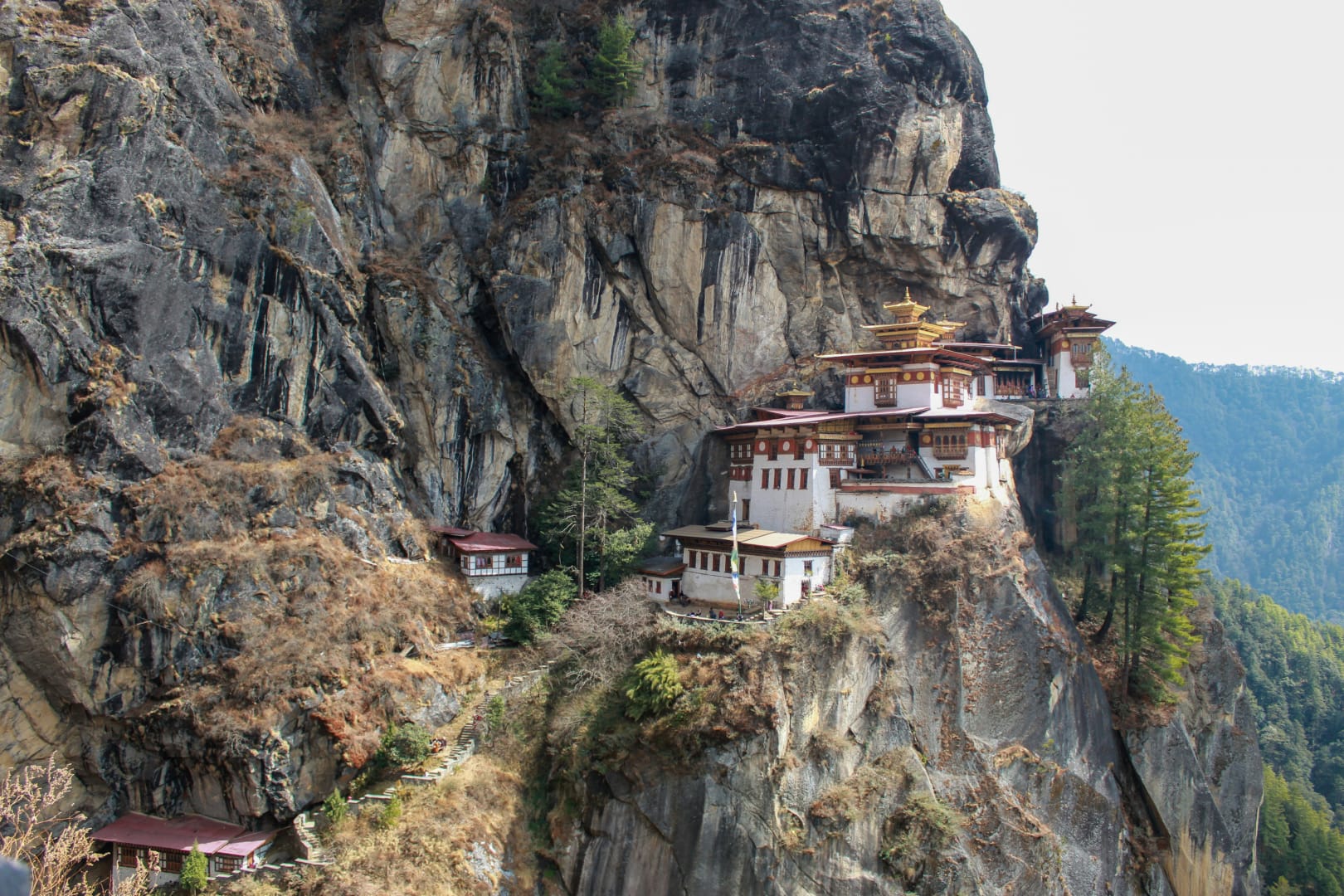
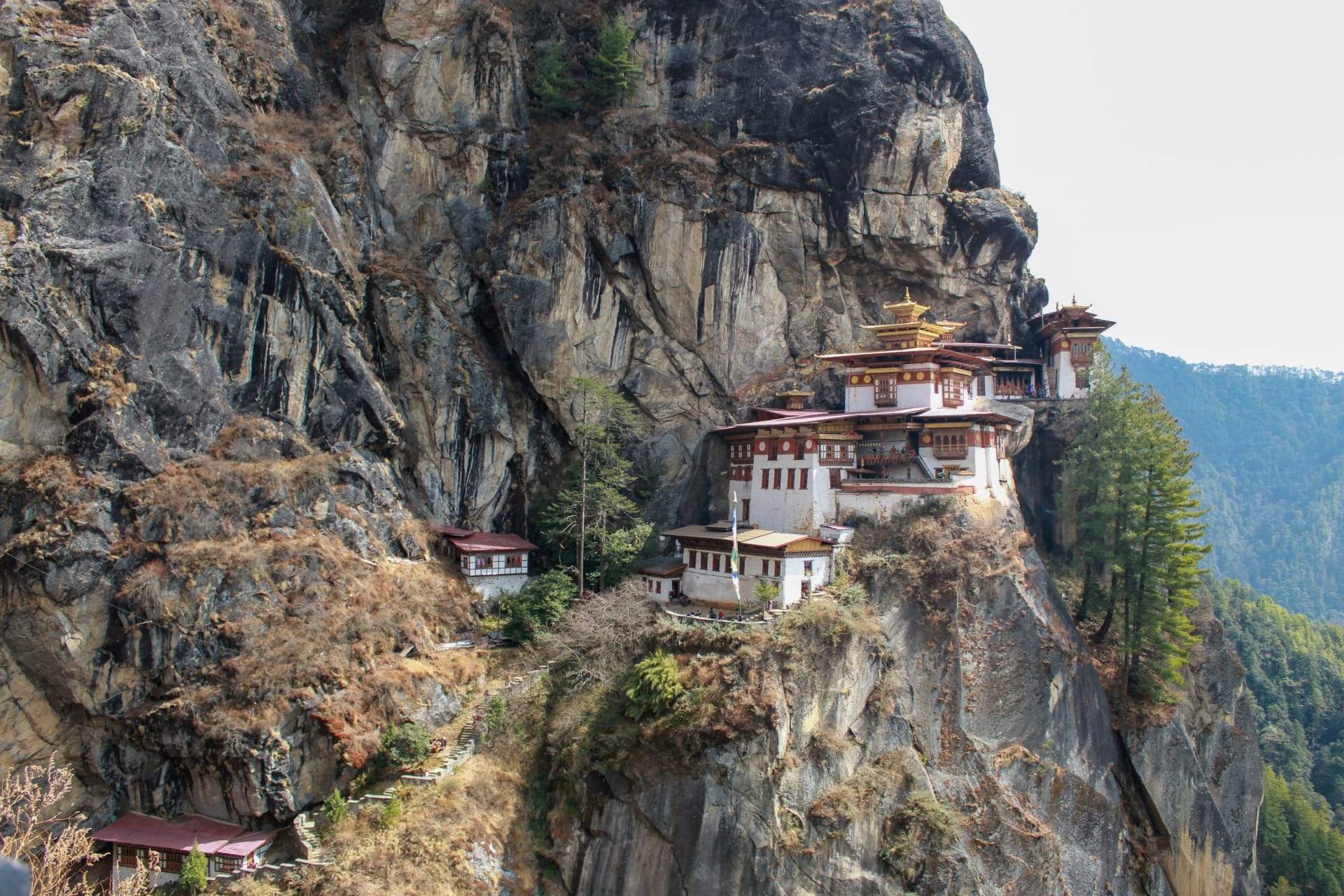
- Tiger’s Nest Monastery (Taktsang Palphug): Bhutan’s most sacred site, perched on a cliff 900m above the valley. Guru Rinpoche meditated here for three years, arriving on the back of a flying tigress. The hike takes 4-6 hours round trip.
- Paro Rinpung Dzong: Fortress of the Heap of Jewels, built in 1646. Watchtower (Ta Dzong) now houses the National Museum.
- Kyichu Lhakhang: One of Bhutan’s oldest temples (7th century), featuring an original statue of the Future Buddha.
- Drukgyel Dzong: Ruined fortress celebrating Bhutan’s victory over Tibetan invaders. Mount Jomolhari visible on clear days.
- National Museum: Housed in Ta Dzong watchtower, showcasing Bhutanese art, textiles, and artifacts.
Best Time: March-May (spring flowers) or September-November (clear views) Duration: 2-3 days
2. Thimphu: Capital City
Elevation: 2,300m (7,546ft) Why Visit: The world’s only capital without traffic lights, blending tradition and modernity.
Must-See Attractions:
- Buddha Dordenma: 177-foot bronze statue, world’s largest sitting Buddha, containing 125,000 smaller Buddha statues.
- Tashichho Dzong: Seat of Bhutan’s government and throne room. Open to visitors after 5 PM when government offices close.
- National Memorial Chorten: Prominent stupa built in 1974 for the third king. Circumambulate with locals at dawn or dusk.
- Takin Preserve: See Bhutan’s national animal—a strange creature resembling cow-goat-sheep.
- Motithang Museum: Traditional Bhutanese life exhibits in a restored farmhouse.
- Weekend Market: Saturday-Sunday sensory explosion of produce, crafts, and local life.
- Traditional Arts Institute: Watch students learning thangka painting, woodcarving, sculpture.
- Jungshi Handmade Paper Factory: Traditional paper-making demonstrations.
Best Time: Year-round; winter for crisp mountain views, spring for rhododendrons Duration: 2 days
3. Punakha: Ancient Capital
Elevation: 1,300m (4,265ft) Why Visit: Bhutan’s most beautiful dzong and warmer climate at the confluence of two rivers.
Must-See Attractions:
- Punakha Dzong: Palace of Great Happiness, widely considered Bhutan’s most stunning fortress. Built at the rivers’ confluence (Mo Chhu and Pho Chhu), features elaborate murals and sacred relics. Visit at golden hour for magical light.
- Chimi Lhakhang: Fertility Temple dedicated to the Divine Madman, Lama Drukpa Kunley. Phallic symbols painted on houses ward off evil spirits.
- Suspension Bridge: 160m bridge over Po Chhu River, thrilling walk with stunning dzong views.
- Khamsum Yulley Namgyal Chorten: Modern stupa with valley views, 30-minute hike through rice fields.
- Royal Botanical Park: At Lamperi, featuring Himalayan flora and walking trails.
- River Rafting: Gentle floats on Mo Chhu River (Grade I-II), suitable for families.
Best Time: February-May (spring) or September-November (autumn) Duration: 2 days
4. Bumthang: Spiritual Heartland
Elevation: 2,600-3,500m (8,530-11,483ft) Why Visit: Central Bhutan’s sacred valley, home to ancient temples and monasteries.
Must-See Attractions:
- Jambay Lhakhang: One of 108 temples built by Tibetan king Songtsen Gampo in 7th century. Features October Jambay Lhakhang Drup festival with fire ceremonies.
- Kurje Lhakhang: Sacred cave where Guru Rinpoche meditated, leaving body imprint on rock. Three temples spanning different centuries.
- Tamshing Lhakhang: 15th-century temple with original wall paintings by Pema Lingpa, treasure revealer.
- Jakar Dzong: Fortress of the White Bird, overlooking the Chokhor valley.
- Mebar Tsho (Burning Lake): Sacred lake where Pema Lingpa discovered hidden treasures.
- Ura Village: Beautiful traditional village with cobblestone streets and April Ura Yakchoe festival.
Best Time: April-June (spring) or September-October (autumn) Duration: 2-3 days
5. Phobjikha Valley: Crane Paradise
Elevation: 2,900m (9,514ft) Why Visit: Glacial valley and winter home of endangered black-necked cranes.
Must-See Attractions:
- Black-Necked Crane Information Centre: Learn about these sacred birds that migrate from Tibet each winter.
- Gangtey Goemba: 17th-century monastery overlooking the valley, featuring elaborate paintings.
- Gangtey Nature Trail: Easy 90-minute walk through pine forests with valley views.
- Black-Necked Crane Festival (November 11): Children perform crane dances, conservation celebrations.
- Crane Watching: November-February, watch cranes arrive, circumambulate the monastery three times before landing.
Best Time: November-February (crane season) Duration: 1-2 days
6. Wangdue Phodrang: Traditional Town
Elevation: 1,300m (4,265ft) Why Visit: Traditional town with spectacular dzong and nearby villages.
Must-See Attractions:
- Wangdue Dzong: Dramatic ridge-top fortress (2012 fire destroyed parts, rebuilding ongoing).
- Radak Village: Known for bamboo weaving and traditional products.
- Sha Region: Rhododendron forests in spring (harvesting for local use).
- Wangdue Tshechu: September festival featuring unique Raksha Mangcham (Dance of the Ox).
Best Time: September (festival) or April-May (flowers) Duration: 1 day (often combined with Punakha)
7. Haa Valley: Hidden Gem
Elevation: 2,670m (8,760ft) Why Visit: Remote valley near Tibetan border, opened to tourists in 2002.
Must-See Attractions:
- Lhakhang Karpo (White Temple) & Lhakhang Nagpo (Black Temple): Two ancient temples built by pigeons, according to legend.
- Haa Dzong: 19th-century fortress with stunning mountain views.
- Chele La Pass: Drive from Paro (3,988m), Bhutan’s highest motorable pass with spectacular views of both valleys.
- Traditional Villages: Authentic rural life, minimal tourism.
- Haa Tshechu: September festival, less crowded than Paro/Thimphu.
Best Time: March-May (rhododendrons) or September-October (clear views) Duration: 1-2 days
8. Trongsa: Ancestral Home
Elevation: 2,200m (7,218ft) Why Visit: Bhutan’s most impressive dzong and ancestral home of the monarchy.
Must-See Attractions:
- Trongsa Dzong: Massive fortress-monastery perched dramatically on a ridge, masterpiece of Bhutanese architecture. Watchtower (Ta Dzong) now a museum dedicated to the monarchy.
- Yurungkhar Village: Traditional village with weaving demonstrations.
- Kuenga Rabten: Winter palace of the second king, featuring beautiful architecture.
- Trongsa Tshechu: December festival, less crowded than western festivals.
Best Time: April-May or September-October Duration: 1-2 days
9. Eastern Bhutan: Remote Frontier
Elevation: 600-3,000m (1,968-9,843ft) Why Visit: Untouristed region with distinct culture and spectacular landscapes.
Must-See Attractions:
- Trashigang Dzong: Fortress overlooking the Dangme Chhu river.
- Trashiyangtse: Chorten Kora temple (similar to Bodhnath, Nepal), small town known for wooden bowls.
- Radhi Village: Rice basket of the east, famous for silk weaving.
- Merak & Sakteng: Semi-nomadic region with unique culture, distinctive dress (black wool with red trim), special permit required.
- Rhododendron Parks: Sakteng Wildlife Sanctuary features incredible rhododendron diversity.
Best Time: March-May (flowers) or October-November (clear views) Duration: 3-4 days
10. Remote Trekking Regions
High Himalayan Passes: For adventure seekers only.
Popular Trekking Regions:
- Jomolhari Trek: 9 days, views of sacred Mount Jomolhari (7,326m)
- Druk Path Trek: 6 days, beginner-friendly with beautiful lakes
- Snowman Trek: 25+ days, world’s most challenging trek
- Laya-Gasa Trek: To nomadic Laya village (3,800m)
Best Time: March-May or September-October Duration: 6-25+ days depending on trek
Tours & Activities in Bhutan
Cultural Experiences
Visit Dzongs and Monasteries:
- What: Fortress-monasteries combining administrative and religious functions
- Highlights: Paro Rinpung, Punakha Dzong, Tashichho Dzong
- Etiquette: Dress modestly, remove shoes, walk clockwise around stupas
Attend a Tshechu Festival:
- What: Religious festivals commemorating Guru Rinpoche with masked cham dances
- Major Festivals: Paro Tshechu (March/April), Thimphu Tshechu (September/October), Punakha Tshechu (February/March)
- Experience: Sacred thongdrel unfurling, colorful costumes, community celebration
Traditional Hot Stone Bath:
- What: Heated river stones placed in wooden tub with medicinal herbs
- Benefits: Relieves muscle aches, promotes relaxation, improves circulation
- Duration: 1-2 hours, book in advance
- Cost: $30-50 per session
Archery Experience:
- What: Try Bhutan’s national sport
- Format: Traditional bamboo bows or modern compound bows
- Experience: Friendly competition, traditional songs and dances
- Where: Local archery ranges, arranged through guide
Adventure Activities
Trekking:
- Beginner: Druk Path Trek (6 days), Paro-Thimphu via sacred lakes
- Intermediate: Jomolhari Trek (9 days), Mount Jomolhari base camp
- Advanced: Snowman Trek (25+ days), remote high-altitude passes
- What’s Included: Guide, support staff, pack animals, meals, camping gear
River Rafting:
- Where: Po Chhu (Punakha), Mo Chhu (Punakha)
- Grade: I-II (gentle, family-friendly)
- Season: March-May, September-November
- Duration: 1-2 hours
Mountain Biking:
- Trails: Around Paro, Thimphu, Punakha valleys
- Difficulty: Easy to challenging
- Rental: Available through tour operators
Bird Watching:
- Biodiversity: Over 700 species recorded
- Highlights: Black-necked cranes (November-February), Himalayan monal, blood pheasant
- Best Areas: Phobjikha Valley, Bumthang, Jomolhari region
Learning Experiences
Cooking Classes:
- What: Learn to make ema datshi, momos, red rice, suja (butter tea)
- Duration: 3-4 hours
- Includes: Market visit, cooking, eating your creations
- Where: Thimphu, Paro
Traditional Weaving:
- Where: Khoma village (silk weaving), Radi village (raw silk)
- What: Learn backstrap loom techniques, natural dye preparation
- Products: Purchase textiles directly from weavers
Thangka Painting Classes:
- What: Learn traditional Buddhist painting techniques
- Where: Traditional Arts Institute (Thimphu), private workshops
- Duration: Half-day to multi-day courses
Meditation Retreats:
- Where: Tango, Cheri, or Phajoding monasteries
- Duration: 30 minutes to multi-day retreats
- Instruction: Available from monks upon request
Special Interest Tours
Photography Tours:
- Highlights: Festivals, landscapes, architecture, portraits
- Access: Special locations for optimal light
- Guide: Photography-focused itinerary
Pilgrimage Tours:
- Sacred Sites: Tiger’s Nest, Kurje Lhakhang, Mebar Tsho
- Blessings: Receive blessings from high lamas
- Ceremonies: Arrange blessing ceremonies, butter lamp offerings
Wellness Retreats:
- Focus: Yoga, meditation, spa treatments, traditional medicine
- Locations: Luxury resorts with wellness programs
- Duration: 5-10 days
Practical Information for Bhutan Travel
Currency and Money
Bhutanese Ngultrum (BTN):
- Pegged to Indian Rupee at 1:1
- INR widely accepted (except INR 500, 2,000 notes)
- ATMs available in Thimphu and Paro
- Credit cards accepted at hotels and larger restaurants
Budget Per Day:
- Budget traveler: Nu. 1,500-2,000 ($18-25)
- Mid-range: Nu. 3,000-5,000 ($35-60)
- Luxury: Nu. 5,000+ ($60+)
Money Exchange:
- Best rates at banks (Bank of Bhutan, Bhutan National Bank)
- Hotel exchange counters available but higher rates
- Carry small bills for tips and small purchases
Tipping:
- Guide: $15-25 per day
- Driver: $10-15 per day
- Hotel staff: $5-10 total
- 10% standard for good service at restaurants
Communication
Language:
- Official: Dzongkha
- Widely Spoken: English (all guides, most hotels, many locals)
- Useful Phrases:
- “Kuzuzangpo” = Hello
- “Kadrin chhe” = Thank you
- “Tashi Delek” = Greetings/auspicousness
SIM Cards and Internet:
- Providers: TashiCell, Bhutan Telecom
- Cost: Nu. 300-500 for SIM card with data
- Coverage: Good in towns, limited in remote areas
- WiFi: Available in most hotels (speeds vary)
- Roaming: Check with your home provider
Electricity
Voltage: 230V Plugs: Types D and M (round pins, similar to India) Adapters: Bring universal adapter Power: Generally reliable in cities; occasional outages in remote areas
Packing Essentials
Clothing:
- Layering system: Base layers (quick-dry), mid layers (fleece), outer shell (waterproof)
- Hiking pants: 2-3 pairs, zip-off options for versatility
- T-shirts: 4-6 (quick-dry, not cotton)
- Warm jacket: Down or synthetic, essential even in summer
- Rain gear: Waterproof jacket, rain pants for monsoon/trekking
- Modest clothing: For temple visits (shoulders and knees covered)
Footwear:
- Hiking boots: Waterproof with ankle support (broken in!)
- Comfortable walking shoes: For city visits and temple floors
- Sandals/flip-flops: For hotels, showers
- Socks: Hiking socks (merino wool), casual socks, thermal socks for winter
Accessories:
- Sun protection: Hat, sunglasses, SPF 50+ sunscreen
- Warm hat and gloves: For winter or high altitude
- Scarf/buff: Versatile for sun, dust, warmth
- Day pack: 20-30L for daily excursions
Essentials:
- Reusable water bottle: Filter recommended
- Personal medications: In original packaging
- First aid kit: Band-aids, antiseptic, pain relievers
- Wet wipes/hand sanitizer
- Travel adapter: Type D/M
- Camera: With zoom lens for festivals and landscapes
- Power bank: For charging during travel days
Seasonal Additions:
- Winter (Dec-Feb): Heavy down jacket, thermals, extra warm layers, gloves, warm hat
- Monsoon (Jun-Aug): Quality rain gear, extra socks, quick-dry everything, gaiters for leeches
- Festival: Respectful clothing (gho/kira optional but fun)
Food and Drink
Bhutanese Cuisine:
Ema Datshi: National dish—chilies and cheese (can be very spicy!) Kewa Datshi: Potato and cheese (milder option) Shakam Paa: Dried beef with chili Momos: Tibetan-style dumplings (beef, chicken, vegetable, cheese) Red Rice: Nutty, whole grain rice staple Suja: Butter tea (salty, acquired taste) Ara: Local rice wine (home-distilled)
Eating Tips:
- Ask for “mild” spice level if sensitive
- Red rice is mild and generally liked by kids
- Momos are almost universally loved
- Western food available in hotels
Meals:
- Breakfast: Hotels (eggs, toast, porridge, sometimes ema datshi)
- Lunch: Restaurants during touring (often picnic lunches on trek)
- Dinner: Hotel restaurants or local eateries
Drinking Water:
- Bottled water provided by tour operator
- Avoid tap water completely
- Use bottled water for brushing teeth
Accommodation
Hotel Categories:
3-Star (Budget):
- Cost: $40-60 per night
- Features: Clean, comfortable, basic amenities
- Includes: Hot water, WiFi (usually), breakfast
- Example: Hotel Phuntsho Pelri (Paro), Hotel Khamsum (Thimphu)
4-Star (Mid-Range):
- Cost: $80-150 per night
- Features: Boutique properties, better locations, enhanced services
- Includes: All amenities, cultural touches
- Example: Damchen Resort (Punakha), Olathang Hotel (Paro)
5-Star (Luxury):
- Cost: $200-400+ per night
- Features: World-class amenities, spa, exceptional service
- Properties: Uma Paro, Taj Tashi (Thimphu), Six Senses, Aman, Como
- Includes: Fine dining, spa facilities, stunning locations
Farmhouse Stays:
- Experience: Traditional village life
- Features: Wood-burning bukhari stove, home-cooked meals
- Considerations: Shared bathrooms (budget), authentic hospitality
- Where: Paro valley, Punakha villages, Bumthang
What to Expect:
- Hot water not guaranteed in budget places
- Electric blankets common in winter
- 24/7 hot water in mid-range and above
- WiFi standard in 3-star and above
- Room heaters essential in winter (confirm when booking)
Shopping
Popular Souvenirs:
Textiles:
- Handwoven fabrics (kira, ghos, scarves)
- Raw silk from Radi
- Wild silk from Bumthang
- Prices: $50-500+ depending on quality
Handicrafts:
- Traditional wooden bowls (dapa)
- Bamboo products
- Paper products from de-sho paper
- Hand-carved masks
- Prices: $10-100
Religious Items:
- Prayer flags
- Prayer wheels
- Thangkas (paintings)
- Singing bowls
- Buddhist statuary
- Prices: $20-200+
Other:
- Bhutanese stamps (world-renowned)
- Local honey and spices
- Challa seeds (traditional game)
- Dzi beads (authentic ones expensive and rare)
Where to Shop:
- Thimphu Weekend Market: Best for local products, reasonable prices
- Handicrafts Emporium: Fixed prices, government-run (Thimphu)
- Local Shops: Bargaining expected for handicrafts
- Weaving Centers: Purchase directly from weavers
Bargaining:
- Expected in markets and small shops
- Not appropriate in fixed-price stores
- Be respectful, friendly negotiation
Transportation
Private Vehicles:
- Type: SUVs (Toyota Prado, Hyundai Tucson typical)
- Included in tour packages
- Driver: Bhutanese, licensed, experienced on mountain roads
- Condition: Generally well-maintained
- Roads: Paved but winding, mountainous
Driving:
- Side: Left (like India/UK)
- Road Rules: Strict speed limits, zero tolerance for drinking and driving
- Self-Drive: NOT permitted for tourists
Domestic Flights:
- Route: Paro-Yangphula (east), Paro-Bumthang (seasonal)
- Airline: Druk Air
- Cost: $150-250 one way
- Saves Time: Eastern Bhutan requires 2+ days driving vs. 1 hour flight
Seasonal Guide: Month by Month
January
Weather: Cold (10-15°C days, below freezing nights) Highlights: Snow-capped peaks, clear mountain views, fewer tourists Best For: Budget travelers, mountain photography, cultural sites Consider: Cold temperatures, possible road closures at high passes
February
Weather: Cold to cool (10-18°C days) Highlights: Punakha Tshechu & Drubchen, winter begins loosening grip Best For: Festival lovers, budget travel, snow views Consider: Cold mornings/nights, book 3-4 months ahead for festivals
March
Weather: Pleasant (15-22°C days, cool nights) Highlights: Paro Tshechu, spring flowers begin, rhododendrons at elevation Best For: Festivals, hiking, photography, first-time visitors Consider: Popular season, book 6-9 months ahead for festivals
April
Weather: Ideal (15-25°C days, cool nights) Highlights: Rhododendrons blooming spectacularly, clear skies, Paro Tshechu (early April) Best For: Trekking, photography, flowers, festivals Consider: Peak season, higher prices, book well ahead
May
Weather: Warm (20-25°C days) Highlights: Late rhododendrons, green valleys, bird watching Best For: Trekking before monsoon, nature lovers Consider: Getting warmer, occasional pre-monsoon showers
June
Weather: Warm to hot (20-30°C), humid Highlights: Lush greenery, fewer tourists, lower prices Best For: Budget travelers, cultural sites, luxury resorts Consider: Monsoon begins, rain, leeches on forest trails
July
Weather: Hot and humid (25-30°C), rainy Highlights: Peak monsoon, waterfalls, lush landscapes, minimal tourists Best For: Budget travelers, cultural immersion, luxury stays Consider: Heavy rain, poor visibility, challenging trekking conditions
August
Weather: Warm and humid (20-30°C), rainy Highlights: Green landscapes, fewer crowds, festivals in eastern Bhutan Best For: Budget travelers, cultural sites Consider: Monsoon conditions, humidity, leeches
September
Weather: Pleasant (15-22°C), clearing Highlights: Rice harvest, Thimphu Tshechu, improving weather Best For: Festivals, cultural tours, photography Consider: Booking well ahead for festivals, occasional early-month rain
October
Weather: Perfect (15-22°C), crystal clear Highlights: Peak season, best mountain views, harvest season, festivals Best For: Everything—trekking, festivals, photography, first-timers Consider: MOST POPULAR MONTH, book 6+ months ahead, higher prices
November
Weather: Cool to pleasant (12-20°C) Highlights: Black-Necked Crane Festival, clear air, autumn colors Best For: Photography, trekking, wildlife, fewer crowds than October Consider: Getting colder at night, book ahead for crane festival
December
Weather: Cold to cool (10-18°C days, cold nights) Highlights: Winter begins, snow at high elevations, Trongsa Tshechu Best For: Budget travel, cultural sites, photography, fewer tourists Consider: Cold temperatures, possible snow at high passes
Special Traveler Types
Solo Travelers
Is Bhutan Good for Solo Travelers? Absolutely! Bhutan is one of the world’s safest destinations for solo travelers.
Advantages:
- Extremely safe (violent crime virtually non-existent)
- Mandatory guide provides companionship and local connection
- Locals are genuinely welcoming to solo visitors
- Easier to connect with locals when not in a couple/group
Considerations:
- Single supplement: 30-50% extra for hotel rooms
- Guide as companion: Your guide becomes your primary social connection
- Cost: No cost-splitting benefits, pay full guide/vehicle costs
- Meeting others: Possible at festivals, popular sites, hotels
Tips:
- Be open to connection with your guide
- Attend festivals for social opportunities
- Choose boutique hotels with communal dining
- Consider group tours for cost savings and social connection
Solo-Friendly Activities:
- Meditation retreats
- Hot stone baths
- Cooking classes
- Trekking (with guide and support staff)
- Photography tours
Sample 7-Day Solo Itinerary:
- Paro (2 days): Tiger’s Nest hike, acclimatization, bond with guide
- Thimphu (2 days): Buddha Dordenma, weekend market, cultural sites
- Punakha (2 days): Punakha Dzong, Chimi Lhakhang, hot stone bath
- Return to Paro (1 day): Departure
Budget: $2,800-3,500 for 7 days (including single supplement)
Families with Children
Is Bhutan Good for Families? Yes! Bhutan is exceptionally family-friendly with genuine warmth toward children.
Best Ages for Bhutan Travel:
Infants/Toddlers (0-3):
- Pros: Free entry to attractions, portable, incredible photos
- Cons: Diapers/formula logistics, altitude monitoring, frequent breaks needed
Young Children (4-7):
- Pros: Old enough to appreciate experiences, portable if tired, free/minimal entry fees
- Cons: Long hikes challenging, early wake times disrupt schedules, picky eating with spicy food
School-Age (8-12):
- Pros: Ideal age—can engage meaningfully, handle moderate hikes, remember the trip
- Cons: School scheduling, may get bored with repeated monastery visits
- Educational Value: Tremendous—GNH philosophy, Buddhism, environmental conservation
Teenagers (13+):
- Pros: Can handle challenging activities, engage in cultural conversations
- Cons: May prefer adventure over culture, tech withdrawal from limited connectivity
- Strategy: Involve them in planning, give ownership over certain aspects
Family-Friendly Activities:
Tiger’s Nest Monastery:
- Ponies available for uphill section (children under 10)
- Frequent breaks with snacks and water
- Legends capture young imaginations
Archery:
- Kids love trying Bhutan’s national sport
- Friendly competition creates family memories
- Traditional songs and dances add entertainment
Takin Preserve (Thimphu):
- Strange, fascinating animals for children
- Easy, short visit
- Educational about Himalayan wildlife
Mask Dances (Festivals):
- Colorful costumes and elaborate masks captivate children
- Audience participation invited at end
- Pure magic for young minds
Hot Stone Baths:
- Like a giant hot tub for kids
- Watching preparation is fascinating
- Test temperature carefully before children enter
Paper Making Demonstrations:
- Hands-on learning engages children
- They can make their own paper
- Appreciation for traditional crafts
River Rafting:
- Safe but exciting family floats
- Beautiful scenery
- Minimum age usually 5-6 years
Sample 7-Day Family Itinerary:
- Paro (2 days): Tiger’s Nest (with pony if needed), National Museum, light valley hikes
- Thimphu (2 days): Takin Preserve, paper factory, weekend market, Buddha Dordenma
- Punakha (2 days): Punakha Dzong, Chimi Lhakhang (kids find the phallic symbols hilarious), suspension bridge, river rafting
- Return to Paro (1 day): Departure
Family Travel Tips:
- Pace: Slow down, adjust to family rhythm
- Breaks: Schedule downtime, tired children = miserable travel
- Engagement: Involve children in planning, give them a camera
- Preparation: Show pictures/videos before trip, learn basic Dzongkha
- Packing: Comfortable walking shoes (broken in!), layers, entertainment for drives
- Food: Bring snacks from home, ask for mild spice levels
- Safety: Bhutan is extremely safe, normal precautions apply
Budget Considerations:
- Children under 6: Often free
- Children 6-12: 50% discount on tour packages
- SDF: May be waived or discounted for children (check current policy)
- Sample family cost (2 adults, 2 children, 7 days): $6,500-12,000 depending on accommodation level
Senior Travelers
Is Bhutan Good for Seniors? Yes! Bhutan is very senior-friendly with appropriate planning.
Advantages:
- Safe, welcoming, respectful culture
- Guides can adjust pace to match energy levels
- Cultural depth appreciated by mature travelers
- Luxury accommodation options excellent
Considerations:
- Altitude: Thimphu/Paro at 2,200m generally well-tolerated, but monitor health
- Physical Demands: Some sites require stairs/walking
- Pacing: Request slower pace in itinerary
- Accessibility: Limited due to terrain and temple stairs
- Medical Facilities: Available in Thimphu/Paro, limited elsewhere
Senior-Friendly Activities:
Cultural Sites:
- Most dzongs and monasteries accessible (some stairs)
- Guides adjust explanations and pace
- Focus on depth over quantity
Festivals:
- Seating often available for elderly
- Spectacular cultural experiences
- Visit early for best viewing spots
Hot Stone Baths:
- Therapeutic for aches and pains
- Traditional healing practice
- Relaxing after light activities
Easy Hikes:
- Gangtey Nature Trail (Phobjikha): Flat, 90 minutes
- Paro Valley walks: Gentle, scenic
- Buddha Dordenma: Easy approach, stunning views
Motorboat Tours:
- Punakha River: Scenic, no physical demands
- Gentle floats with dzong views
Sample 10-Day Senior Itinerary (Relaxed Pace):
- Paro (3 days): Acclimatize, Tiger’s Nest viewpoint only (if hike too challenging), National Museum, Kyichu Lhakhang, valley sightseeing
- Thimphu (3 days): Buddha Dordenma, Tashichho Dzong, Traditional Arts Institute, Takin Preserve, Memorial Chorten, weekend market if timing aligns
- Punakha (3 days): Dochula Pass (views from parking), Punakha Dzong (main courtyard), Chimi Lhakhang (short walk), hot stone bath
- Return to Paro (1 day): Departure
Senior Travel Tips:
- Communicate: Tell guide about pace preferences and limitations
- Medications: Bring sufficient supply, carry in original packaging
- Insurance: Ensure covers pre-existing conditions
- Altitude: Take it easy first 24 hours, stay hydrated
- Rest: Schedule afternoon breaks back at hotel
- Clothing: Layers for temperature changes, comfortable shoes
- Request: Ask for ground-floor rooms where available
Accessibility Notes:
- Most temples require stairs (historic sites, no elevators)
- Dzongs have stairs but main courtyards accessible
- Vehicles can drop close to most sites
- Guides assist with accessibility challenges
Budget: Standard rates, but request senior discounts where available (some hotels offer 10-20% off for seniors 60+)
Honeymooners and Couples
Why Bhutan for a Honeymoon? Romantic, secluded, transformative—Bhutan offers intimacy in spectacular settings.
Romantic Experiences:
Luxury Resorts:
- Uma Paro: COMO Shambhala Retreat with spa, valley views
- Taj Tashi (Thimphu): Luxury in the capital, fine dining
- Six Senses: Thimphu and Paro properties, wellness focus
- Aman: Multiple properties, ultra-luxury experience
Private Hot Stone Baths:
- Romantic setting for two
- Medicinal herbs, relaxation
- Book at luxury hotels for best experience
Sunset Picnics:
- Arranged at scenic viewpoints
- Dochula Pass with Himalayan views
- Paro Valley with Tiger’s Nest above
Private Ceremonies:
- Buddhist blessing ceremonies
- Butter lamp lighting for longevity
- Astrology readings for couples
Couples’ Activities:
- Cooking classes together
- Thangka painting for two
- Meditation sessions
- Private yoga sessions
- Couples’ spa treatments
Romantic Seasons:
- October: Perfect weather, clear views
- April: Rhododendrons, spring blooms
- February: Fewer crowds, intimate atmosphere
Sample 7-Day Romantic Itinerary:
- Uma Paro (3 days): Tiger’s Nest hike (pony assistance if desired), spa treatments, private dining, valley exploration
- Thimphu (2 days): Taj Tashi luxury, fine dining, cultural sites at leisure, private ceremonies
- Punakha (2 days): Luxury resort, private hot stone bath, Punakha Dzong at sunset, romantic riverside dinners
- Return to Paro (1 day): Departure
Budget: $5,000-10,000+ per couple for 7 days luxury experience
Budget Travelers
Is Bhutan Possible on a Budget? Yes, with strategic planning. Bhutan is never “cheap,” but you can optimize value.
Money-Saving Strategies:
Travel Off-Season:
- June-August (Monsoon): Lowest prices, lush landscapes
- December-February (Winter): Fewer tourists, possible discounts
- Avoid: October (peak pricing, highest demand)
Group Travel:
- 4+ people: Share guide/vehicle costs
- Larger groups (8+): Group discounts, negotiated rates
- Join fixed-departure tours: Share costs with other travelers
Choose Budget Accommodations:
- 3-star hotels: Clean, comfortable, basic amenities
- Farmhouse stays: Authentic, lower cost, cultural immersion
- Shared bathrooms: Significant savings if acceptable
Optimize Duration:
- 5 days vs. 7 days: Fewer nights = lower total SDF cost
- Focus on one region: Less driving, more depth
- Internal flights: Save time (Eastern Bhutan), but cost money
Strategic Planning:
- Book early: Lock in prices before peak season hikes
- Regional entry: Enter/exit via India (cheaper flights)
- Combine activities: Join shared activities when possible
Budget Breakdown (7 days, per person):
- SDF: $700 (fixed, cannot be reduced)
- Accommodation (3-star): $350 (vs. $1,400 for 5-star)
- Meals: $150 (included in most packages)
- Guide: $250 (shared if group)
- Vehicle: $400 (shared if group)
- Total: ~$2,000-2,500 per person
Sample Budget 7-Day Itinerary:
- Focus: Paro, Thimphu, Punakha (classic circuit)
- Accommodation: 3-star hotels
- Activities: Tiger’s Nest hike, major sites only, fewer optional activities
- Transport: Shared with group if possible
- Season: June-August or December-February
Budget Tips:
- Limit shopping: Souvenirs add up
- Tips: Still expected but can be modest for good service
- Alcohol: Local beer reasonable, imported expensive
- Activities: Focus on included activities (SDF covers all entry fees)
What NOT to Skimp On:
- Guide quality: Makes or breaks the experience
- Travel insurance: Essential
- Altitude preparation: Arrive rested, hydrated
- Proper gear: Especially for trekking
50+ Frequently Asked Questions
Visas, SDF, and Entry Requirements
1. Do I need a visa for Bhutan? Yes, unless you’re from India, Bangladesh, or Maldives. All other nationalities require a visa, which must be arranged through a licensed Bhutanese tour operator.
2. How do I get a Bhutan visa? You cannot apply independently. Book through a licensed tour operator who will handle the process. Submit passport copy, photo, and travel insurance. Pay SDF and daily tariff. Receive visa clearance letter via email in 5-7 working days.
3. What is the SDF (Sustainable Development Fee)? A mandatory $100/night fee for international tourists ($15 for regional tourists). It funds free healthcare, education, infrastructure, environmental conservation, and cultural preservation in Bhutan.
4. Can I visit Bhutan independently? No. International tourists must book through a licensed Bhutanese tour operator. This is non-negotiable. Only Indian nationals can travel independently.
5. What documents do I need for Bhutan visa?
- Valid passport (6+ months validity, 2 blank pages)
- Digital passport photo (JPEG, white background)
- Travel insurance (min $50,000 coverage)
- Confirmed booking with licensed tour operator
6. How long does visa processing take? Typically 5-7 working days once all documents and payment are received. During peak season, allow 7-10 working days.
7. Can I extend my Bhutan visa? Yes, your tour operator can apply for an extension. You’ll need to pay additional SDF and daily tariff for the extended period.
8. Is the visa fee refundable? The $40 visa fee is generally non-refundable. SDF and daily tariff refunds follow cancellation policies based on timing.
9. Do Indians need a visa for Bhutan? No visa required, but need valid passport OR voter ID card (Aadhar NOT accepted). Regional permit required (can be obtained on arrival or pre-arranged).
10. What is the SDF refund policy?
- 30+ days before: Full refund minus $40 processing fee
- 15-30 days: 50% refund
- 7-14 days: 25% refund
- Less than 7 days: No refund
- Once visa processed: SDF generally non-refundable
Booking and Planning
11. How much does a Bhutan trip cost? For 7 days, expect $2,500-4,500 per person including SDF, accommodation, meals, guide, vehicle, and activities. Plus international flights ($500-1,500 depending on origin).
12. What’s included in Bhutan tour packages? Typically included: SDF ($100/night), visa processing, accommodation (3-5 star), all meals, licensed guide, private vehicle with driver, monastery entrance fees, bottled water, 24/7 support.
13. What’s NOT included in Bhutan tour packages? International flights, travel insurance, personal expenses (shopping, drinks), tips, optional activities (hot stone baths, cultural programs).
14. How far in advance should I book Bhutan?
- Peak season (March-May, September-November): 3-6 months ahead
- Festivals: 6-9 months ahead
- Off-peak: 1-2 months sufficient
- Last-minute: Possible but risks visa delays
15. Can I choose my own accommodation and meals? Yes, the 2023 tourism policy allows more flexibility. You can choose accommodation and meals within guidelines, though your tour operator makes arrangements.
16. How do I choose a Bhutan tour operator?
- Verify license with Bhutan Tourism Council
- Check reviews and testimonials
- Ask about experience with your travel style (solo, family, trekking)
- Compare quotes from 2-3 operators
- Ensure transparent pricing with no hidden costs
17. Are solo travelers charged extra? Yes, solo travelers typically pay a single supplement (30-50% extra for accommodation) and don’t benefit from cost-splitting. However, safety and experience quality justify the cost.
18. Are there discounts for children? Yes. Children under 6 are often free. Ages 6-12 typically receive 50% discount on tour packages. SDF may be waived or discounted (check current policy).
19. Can I customize my Bhutan itinerary? Absolutely! Licensed operators specialize in custom itineraries based on your interests, budget, pace, and duration.
20. How do I pay for my Bhutan tour?
- Deposit (30%): To confirm booking and process visa
- Balance (70%): 30 days before arrival
- SDF: Must be paid before visa processing
- Methods: Bank transfer (most common), credit card (3-4% fee), some operators accept PayPal
Getting to Bhutan and Getting Around
21. How do I get to Bhutan?
- By Air: Fly to Paro International Airport (PBH) via Druk Air or Bhutan Airlines from Bangkok, Singapore, Delhi, Kolkata, Kathmandu, Dhaka, and other cities
- By Land: Enter via Phuentsholing border from India (5-6 hours from Bagdogra/Siliguri), Gelephu, or Samdrup Jongkhar borders
22. Which airlines fly to Bhutan?
- Druk Air (Royal Bhutan Airlines): National carrier
- Bhutan Airlines: Private carrier
23. What’s the flight to Paro like? Spectacular and dramatic! You’ll see Mount Everest, Kanchenjunga, and Bhutan’s sacred peaks. The descent involves a steep turn between mountains before landing in the narrow valley. One of the world’s most challenging landings.
24. Can I book flights before receiving visa clearance? No! Do NOT book flights until you receive your visa clearance letter. You’ll need it for check-in.
25. How do I get to Phuentsholing from India?
- From Bagdogra Airport: 5-6 hours by taxi/private car
- From Siliguri/New Jalpaiguri: 6-7 hours by train/taxi
- From Kolkata: Overnight train to New Jalpaiguri, then taxi
26. Can I self-drive in Bhutan? No. Tourists cannot self-drive. A licensed Bhutanese driver is required. Only Indian nationals can drive their own vehicles.
27. What are the roads like in Bhutan? Paved but winding and mountainous. Driving times are longer than distances suggest. The drive from Thimphu to Punakha (76km) takes 2-3 hours due to mountain roads.
28. Do I need a driving permit for Bhutan? Not for tourists—you won’t be driving. Indian nationals bringing vehicles need permits.
Health, Safety, and Practicalities
29. Is Bhutan safe? Extremely safe! Violent crime against tourists is virtually non-existent. Petty theft is rare. Solo female travelers report feeling very safe.
30. Do I need vaccines for Bhutan? No mandatory vaccines. Recommended: Hepatitis A, Typhoid, routine vaccinations up to date. Yellow fever certificate only if arriving from risk country.
31. Is altitude sickness a problem in Bhutan? Thimphu and Paro (2,200-2,500m) are generally well-tolerated. Take it easy first 24 hours, stay hydrated. Punakha (1,300m) is lower and easier. Monitor for headaches, nausea, dizziness.
32. Is the water safe to drink in Bhutan? No. Drink ONLY bottled or purified water. Avoid tap water completely, including for brushing teeth. Bottled water is provided by tour operators.
33. What’s the food like in Bhutan? Bhutanese food features chilies as a main ingredient! Ema datshi (chilies and cheese) is the national dish. Red rice, momos (dumplings), and stews are staples. Food can be very spicy—ask for “mild” if sensitive.
34. Is Bhutan vegetarian-friendly? Yes! Bhutanese cuisine features many vegetarian dishes. Most restaurants offer vegetarian options.
35. Can I get Western food in Bhutan? Yes, hotels in Paro and Thimphu serve Western dishes. Local restaurants focus on Bhutanese and Indian cuisine.
36. What currency is used in Bhutan? Bhutanese Ngultrum (BTN), pegged to Indian Rupee at 1:1. Indian Rupees widely accepted (except INR 500, 2,000 notes). Exchange USD/EUR/GBP at banks.
37. Can I use credit cards in Bhutan? Visa and Mastercard accepted at 3-star+ hotels, tourist restaurants, and gift shops. Many places are cash-only. Carry sufficient Ngultrum.
38. Are there ATMs in Bhutan? ATMs available in Thimphu and Paro (accept Visa, Mastercard). Limited in other towns. Cannot rely on ATMs in remote areas.
39. Is there WiFi in Bhutan? WiFi available in most hotels (3-star and above). Speeds vary significantly. Limited or no WiFi in remote areas and during trekking.
40. Can I buy a SIM card in Bhutan? Yes, TashiCell and Bhutan Telecom offer SIM cards. Cost: Nu. 300-500 with data. Coverage good in towns, limited in remote areas.
What to See, Do, and Experience
41. What is the #1 thing to do in Bhutan? Hike to Tiger’s Nest Monastery (Taktsang Palphug). This iconic cliffside monastery is Bhutan’s most sacred site and the highlight of most visits.
42. How long is the Tiger’s Nest hike? 4-6 hours round trip. Moderate difficulty with steep sections. Ponies available for first uphill section (children under 10).
43. What are the must-visit festivals?
- Paro Tshechu (March/April): Most famous, stunning setting
- Thimphu Tshechu (September/October): Largest festival
- Punakha Tshechu (February/March): Most unique with battle reenactment
- Black-Necked Crane Festival (November 11): Conservation celebration
44. What should I wear in Bhutan? Modest clothing covering shoulders and knees, especially for temples. Comfortable walking shoes (broken in!). Layers for temperature changes. No shorts/short skirts in religious sites.
45. Do I need to dress traditionally in Bhutan? Not required, but you can rent a gho (men) or kira (women) for festivals or special occasions. Fun for photos!
46. What’s the dress code for temples? Shoulders and knees must be covered. Remove shoes before entering. No hats inside temples. Modest, non-revealing clothing.
47. Can I photograph monks and ceremonies? Always ask permission first. Photography generally allowed at festivals (no flash during dances). Some temples prohibit photography entirely—look for signs or ask.
48. What language do they speak in Bhutan? Dzongkha (official). English widely spoken—your guide will be fluent, most Bhutanese in tourist areas speak some English.
49. What is Gross National Happiness? Bhutan’s development philosophy prioritizing wellbeing over GDP. Measures sustainable development, environmental conservation, cultural preservation, and good governance.
50. Is Bhutan Buddhist? Yes, approximately 75% Buddhist (Vajrayana tradition), 23% Hindu. Buddhism permeates daily life, architecture, and culture.
Seasonal and Timing Questions
51. What is the best time to visit Bhutan? September-November (autumn) offers perfect weather, clearest views, and major festivals. March-May (spring) is excellent for flowers and trekking.
52. When is the worst time to visit Bhutan? July-August (monsoon) brings heavy rain, poor visibility, and humidity. However, it’s the best value with lowest prices and fewest tourists.
53. When can I see black-necked cranes? November-February when they migrate to Phobjikha Valley from Tibet. The Black-Necked Crane Festival is November 11.
54. When are the rhododendrons blooming? March-May, with April being peak bloom at elevations around 3,000m.
55. Can I visit Bhutan in winter? Yes! December-February offers clear mountain views, fewer tourists, and sometimes lower prices. Be prepared for cold (10-15°C days, below freezing nights).
Accommodation and Living
56. What are the hotels like in Bhutan? Range from 3-star (clean, basic, $40-60/night) to 5-star luxury resorts (Uma Paro, Taj Tashi, $200-400+/night). Most are comfortable with hot water and WiFi.
57. Are there luxury hotels in Bhutan? Yes! Uma Paro, Taj Tashi (Thimphu), Six Senses (Thimphu and Paro), Aman, COMO, and other world-class properties offer luxury experiences.
58. Can I stay in a traditional farmhouse? Yes! Farmhouse stays offer authentic cultural immersion. Features wood-burning stoves, home-cooked meals, warm hospitality. Shared bathrooms in budget options.
59. Is there heating in Bhutan hotels? 3-star and above have heating (essential in winter). Electric blankets common. Not guaranteed in budget places—confirm when booking.
60. What is the food like in hotels? Most hotels serve buffet meals with both Bhutanese and Western options. Quality generally good, especially in mid-range and luxury properties.
Special Situations
61. Can I visit Bhutan with dietary restrictions? Yes, inform your tour operator in advance. Vegetarian, vegan, and gluten-free options can be accommodated.
62. Is Bhutan accessible for travelers with disabilities? Limited due to terrain and temple stairs. Some challenges exist, but discuss needs with your tour operator—accommodations can be made where possible.
63. Can I bring medication to Bhutan? Yes, bring prescription medications in original packaging with copy of prescription. Avoid medications containing controlled substances without documentation.
64. Is there a limit on how long I can stay in Bhutan? Standard tourist visa covers up to 30 days. Extensions possible up to 6 months total. Special permits available for longer stays (volunteering, research).
65. Can I work or volunteer in Bhutan? Not on a tourist visa. Special permits required for employment or volunteering. Strict regulations limit foreign workers.
66. Is travel insurance mandatory for Bhutan? Not strictly required for visa, but highly recommended. Some tour operators require proof of insurance. Should cover medical emergencies and evacuation.
Cultural Etiquette and Behavior
67. How do I greet people in Bhutan? “Tashi Delek” is the universal greeting (auspicious/blessings). “Kuzuzangpo” is a formal hello. A slight bow or nod is respectful.
68. What should I not do in Bhutan?
- Don’t point feet at Buddha images, lamas, or thangdrels
- Don’t wear hats inside temples
- Don’t take photos where prohibited
- Don’t touch people’s heads (considered sacred)
- Don’t turn your back to the thongdrel during unfurling
- Don’t climb stupas or mani walls
69. How should I behave in temples?
- Walk clockwise around stupas and mani walls
- Remove shoes before entering
- Dress modestly
- Speak quietly
- Ask before photographing
- Accept tea/snacks when offered (polite refusal: “No, thank you”)
70. Is tipping customary in Bhutan? Appreciated but not mandatory. Guide: $15-25/day. Driver: $10-15/day. Hotel staff: $5-10 total. 10% standard for good restaurant service.
71. Can I give gifts to people in Bhutan? Yes, but thoughtfully. Practical items (school supplies, warm clothing) are appreciated. Avoid giving directly to children (encourages begging)—give through schools/monasteries.
Photography and Technology
72. Can I use my phone in Bhutan? Check roaming with your provider. Better to buy local SIM (TashiCell or Bhutan Telecom) in Thimphu or Paro. Coverage good in towns, limited in remote areas.
73. Can I use drones in Bhutan? Special permit required. NOT allowed over dzongs, temples, airports, or restricted areas. Strict privacy and cultural respect guidelines.
74. What camera gear should I bring for Bhutan?
- DSLR or mirrorless with zoom lens (for festivals and landscapes)
- Wide-angle for dzongs and landscapes
- Fast prime lens for low-light temples
- Lightweight tripod (useful, but consider weight limits)
- Extra batteries (cold drains them faster)
75. Are there charging facilities during trekking? Limited. Some campsites have solar charging. Bring power banks and spare batteries.
Trekking Questions
76. Do I need to be fit to visit Bhutan? Not necessarily! Cultural tours involve light walking only. Trekking requires fitness. Choose activities matching your fitness level.
77. What is the easiest trek in Bhutan? Druk Path Trek (6 days, Paro to Thimphu). Beginner-friendly with beautiful lakes, gradual ascents, and established campsites.
78. What is the hardest trek in Bhutan? Snowman Trek (25+ days). One of the world’s most challenging high-altitude treks, crossing 11 passes over 4,500m.
79. Can I trek independently in Bhutan? No. All treks require licensed guide, support staff, and permits arranged through tour operator.
80. What is provided on treks? Guide, cook, support staff, pack animals/porters, all meals, camping equipment (tents, sleeping mats), toilet tent. Bring personal gear, sleeping bag.
81. Do I need special insurance for trekking? Yes, ensure your travel insurance covers high-altitude trekking (up to 6,000m for some treks) and helicopter evacuation.
Post-Trip Questions
82. Can I extend my stay once in Bhutan? Yes, your tour operator can apply for visa extension. You’ll pay additional SDF and daily tariff for extended nights.
83. Can I re-enter Bhutan after leaving? Yes, but you’ll need a new visa and SDF payment. Cannot leave and return on same visa.
84. What souvenirs should I buy in Bhutan?
- Handwoven textiles (kira, scarves)
- Prayer flags
- Traditional wooden bowls
- Bhutanese stamps (world-renowned)
- Thangkas (Buddhist paintings)
- Paper products
- Local honey and spices
85. Are there restrictions on what I can bring home? Normal customs apply. Antiques cannot be exported without special permit. Avoid purchasing endangered wildlife products.
Miscellaneous
86. What time zone is Bhutan in? BST (UTC+6), 12 hours ahead of US East Coast, 6 hours ahead of GMT.
87. What is the electricity voltage in Bhutan? 230V, same as India/Europe. Plugs Type D and M (round pins). Bring universal adapter.
88. Is Bhutan expensive? Yes, compared to other Asian destinations. But excellent value for money—comprehensive, high-quality experiences with transparent pricing.
89. Why is Bhutan so expensive? The $100/night SDF is the main cost. This fee directly supports Bhutan’s development (free healthcare, education, conservation). All-inclusive pricing means no surprise expenses.
90. Is Bhutan worth the cost? Absolutely! Most travelers describe Bhutan as “life-changing” and “transformative.” The authentic culture, pristine environment, genuine hospitality, and unique development philosophy make it worth every dollar.
91. Can I use Indian Rupees in Bhutan? Yes, INR widely accepted at par with Ngultrum (BTN). However, INR 500 and 2,000 notes are NOT accepted due to Indian regulations.
92. Are there banks in Bhutan? Yes, Bank of Bhutan, Bhutan National Bank, and Druk PNB have branches in major towns. ATMs available in Thimphu and Paro.
93. Can I get a refund if I cancel my Bhutan trip? Depends on timing:
- 30+ days: Full refund minus administrative fees
- 15-30 days: 50% refund
- Less than 15 days: No refund
- SDF generally non-refundable once visa processed
94. What if I get sick in Bhutan? Hospitals in Thimphu and Paro. Basic medical facilities in other districts. Your tour operator assists with medical care. Travel insurance essential.
95. Is there internet in remote Bhutan? Limited or no internet in remote areas and villages. Most hotels in major towns have WiFi. Mobile data available in towns, limited elsewhere.
96. Can I use social media in Bhutan? Yes, not blocked. However, internet speeds can be slow. Download content for offline viewing when possible.
97. What is the shopping like in Bhutan? Textiles, handicrafts, religious items, stamps. Thimphu Weekend Market (Saturday-Sunday) is best for local products. Bargaining expected in markets/small shops.
98. Are there public toilets in Bhutan? Available in towns and tourist sites. Varying quality. Carry tissues and hand sanitizer. Facilities better at hotels and restaurants.
99. Can I drink alcohol in Bhutan? Yes, alcohol available. Bhutanese beer (Druk 10,000) reasonably priced. Imported alcohol expensive. Bars and pubs in Thimphu and Paro.
100. Will I like Bhutan? If you seek authentic culture, Himalayan scenery, spiritual connection, or respite from modern life—yes! Bhutan attracts travelers looking for meaning, not just sightseeing. It’s not for everyone, but those who connect with it deeply love it forever.
Why Choose Silverpine Bhutan?
As a licensed Bhutan tour operator since 2008, Silverpine Bhutan Tours & Treks has guided thousands of travelers from 50+ countries through this magical kingdom. We’re a family-owned Bhutanese company specializing in personalized journeys that honor our traditions while exceeding modern expectations.
Why Silverpine?
Licensed & Certified
- Fully licensed by Bhutan Tourism Council
- Authorized to conduct all tourism activities
- Professional visa and SDF processing
17+ Years of Experience
- Navigated Bhutan’s evolving tourism landscape since 2008
- Deep relationships with trusted local partners
- Expert knowledge of every region
Expert Local Guides
- Certified Bhutanese cultural historians
- Fluent in English, knowledgeable in Buddhist philosophy
- Genuinely warm hospitality—not just reciting facts
Customized Itineraries
- No cookie-cutter packages
- Tailored to your interests, pace, and budget
- Flexible arrangements for solo travelers, families, seniors
Transparent Pricing
- Clear breakdowns with no hidden fees
- All-inclusive pricing (SDF, accommodation, meals, guide, vehicle)
- Value for money at every level
Specializations
- Cultural Tours: Dzongs, festivals, sacred sites
- Trekking Expeditions: From Tiger’s Nest to the Snowman Trek
- Festival Tours: Paro Tshechu, Thimphu Tshechu, and more
- Pilgrimage Journeys: Sacred Buddhist sites, meditation retreats
- Family Adventures: Kid-friendly itineraries, gentle pacing
- Luxury Experiences: Premium resorts, exclusive activities
Our Commitment to You
Authentic Experiences
- Real connections with Bhutanese people and culture
- Not just sightseeing—meaningful engagement
Responsible Tourism
- Practicing sustainable tourism that benefits communities
- Supporting conservation initiatives
- Fair treatment of guides, drivers, and partners
24/7 Support
- Emergency contact throughout your stay
- Responsive service (within 2 hours)
- Your comfort and safety our priority
Personalized Service
- Quick quotes via WhatsApp (+975 7777 3737) or Email (info@silverpinebhutan.com)
- Free consultation with no obligation
- Multi-language service (English, Dzongkha, Hindi)
What Our Travelers Say
“Our Bhutan trip with Silverpine was magical. The guides were knowledgeable, the itinerary perfectly paced, and we felt like family. The Tiger’s Nest trek was challenging but our guide made it enjoyable. We’re already planning our return!” — Sarah & Michael, USA
“Attending Paro Tshechu with Silverpine was a life-changing experience. The festival was mesmerizing, and our guide explained all the sacred dances and rituals. Highly recommend for anyone seeking authentic cultural immersion.” — Rajesh, Singapore
“As a solo female traveler, I felt completely safe in Bhutan with Silverpine. The team took excellent care, the accommodations were comfortable, and I made friends along the way. Bhutan is truly special.” — Elena, Spain
Ready to Plan Your Bhutan Adventure?
This comprehensive guide provides everything you need to start planning your Bhutan journey. But there’s no substitute for personalized consultation with a Bhutan travel expert.
Contact Silverpine Bhutan Today:
- Email: info@silverpinebhutan.com
- WhatsApp: +975 7777 3737
- Office: Thimphu, Bhutan
- Response Time: Within 2 hours
What Happens Next:
- Tell us about your dream trip: Interests, budget, duration, travel style
- Receive a detailed quote: Transparent pricing with clear breakdowns
- Customize your itinerary: We’ll adjust until it’s perfect for you
- Book and relax: We’ll handle visas, SDF, permits, and all logistics
Whether you seek spiritual connection at Tiger’s Nest, cultural immersion during a vibrant tshechu, Himalayan adventure on a legendary trek, or simply respite from the modern world, Bhutan awaits.
The Land of the Thunder Dragon will transform you.
Quick Reference: Essential Information
| Category | Details |
|---|---|
| Capital | Thimphu |
| Population | ~780,000 |
| Language | Dzongkha (official), English widely spoken |
| Currency | Bhutanese Ngultrum (BTN) = 1 Indian Rupee (INR) |
| Religion | Vajrayana Buddhism (75%), Hinduism (23%) |
| Time Zone | UTC+6 |
| SDF (International) | $100 USD per person per night |
| SDF (Regional) | $15 USD per person per night |
| Visa | Required for all except India, Bangladesh, Maldives |
| Best Time | September-November (peak), March-May (excellent) |
| Altitude Range | 200m (south) to 7,000m+ (Himalayas) |
| International Airport | Paro (PBH) |
| Airlines | Druk Air, Bhutan Airlines |
| Driving Side | Left |
| Electricity | 230V, Type D/M plugs |
| Internet | Available in towns, limited in remote areas |
| Safety | Extremely safe, low crime |
| Currency Exchange | Banks in Thimphu/Paro, hotels |
This Bhutan Travel Knowledge Base is maintained by Silverpine Bhutan Tours & Treks, a licensed tour operator since 2008. Last updated: February 2026. For the most current visa regulations, SDF rates, and travel requirements, always consult with a licensed Bhutanese tour operator or the Bhutan Tourism Council.
Have questions we didn’t cover? Contact us at info@silverpinebhutan.com or WhatsApp +975 7777 3737—we’re happy to help!
Tashi Delek! (Greetings and blessings to you)