Welcome to Phobjikha: Bhutan’s Valley of Sacred Cranes
Phobjikha Valley is often called the most beautiful valley in the Himalayas, and for those who have stood on its rim and looked out across the pristine expanse, such descriptions feel entirely justified. This broad glacial valley sits at an elevation of 3,000 meters (9,842 feet), a U-shaped paradise carved by ancient glaciers that retreated millennia ago, leaving behind a landscape that feels both ancient and eternally fresh.
What makes Phobjikha truly extraordinary is its dual identity. It is simultaneously a sanctuary for some of the planet’s most endangered birds and a living landscape where traditional Bhutanese life continues largely unchanged. Unlike many of Bhutan’s steep, V-shaped valleys that channel rivers through narrow gorges, Phobjikha is wide and flat, resembling a bowl surrounded by forested mountains that cradle the valley floor like protective hands.
This unique geography creates a serene, almost mystical atmosphere that has drawn spiritual seekers for centuries. Monks have meditated in these hills, farmers have tilled these fields for generations, and now visitors from around the world come to experience a place that feels somehow removed from the frantic pace of modern life.
Why Visit Phobjikha Valley?
Phobjikha offers a pristine natural environment that remains largely untouched by modern development. The valley has been designated as a protected area, with strict conservation guidelines that have preserved both its ecological integrity and the traditional way of life of its inhabitants. This is not a museum piece created for tourists—a genuine community lives here, farming the land and practicing customs that stretch back generations.
Every winter, hundreds of black-necked cranes migrate from the Tibetan Plateau to escape the harsh cold, transforming the valley into a wildlife spectacle found nowhere else on Earth. These elegant birds, considered embodiments of heavenly beings in Bhutanese culture, arrive in late October and stay until late February. Watching them descend from the sky in the golden light of late afternoon, their distinctive calls echoing across the valley, is an experience that stays with visitors long after they’ve returned home.
Beyond the cranes, Phobjikha rewards visitors with sacred temples that have anchored spiritual practice here for centuries, traditional villages where life moves at its own rhythm, and authentic rural Bhutanese culture that welcomes visitors without losing its essential character.
Top Attractions in Phobjikha
Black-Necked Cranes
The black-necked crane (Grus nigricollis) is the rarest of all crane species, and it holds a special place in both Tibetan and Bhutanese culture. These elegant birds with their distinctive gray bodies, white ear patches, and striking black necks and heads are considered symbols of longevity and good fortune. To see them in their winter home is to witness one of nature’s great migrations—a journey that these birds have undertaken for countless generations.
The crane migration follows an ancient rhythm. They arrive in late October to early November when the first snows begin to fall on the Tibetan Plateau. Typically between 300 and 500 cranes winter in Phobjikha each year. In late February to early March, as Bhutan’s valleys begin to warm and daylight lengthens, they begin their return journey northward. For Bhutanese people, these birds are believed to be incarnations of lamas—high Buddhist teachers who have returned in animal form.
Several locations offer excellent crane watching. The Crane Information Center observation deck provides an elevated vantage point where visitors can watch cranes feeding and socializing without disturbing them. The wetlands near Gangtey Goemba often attract feeding birds in the morning. Various valley floor viewpoints offer different perspectives on the valley and its avian visitors. Guided crane watching tours provide expert knowledge about crane behavior and the valley’s ecology.
Gangtey Goemba (Monastery)
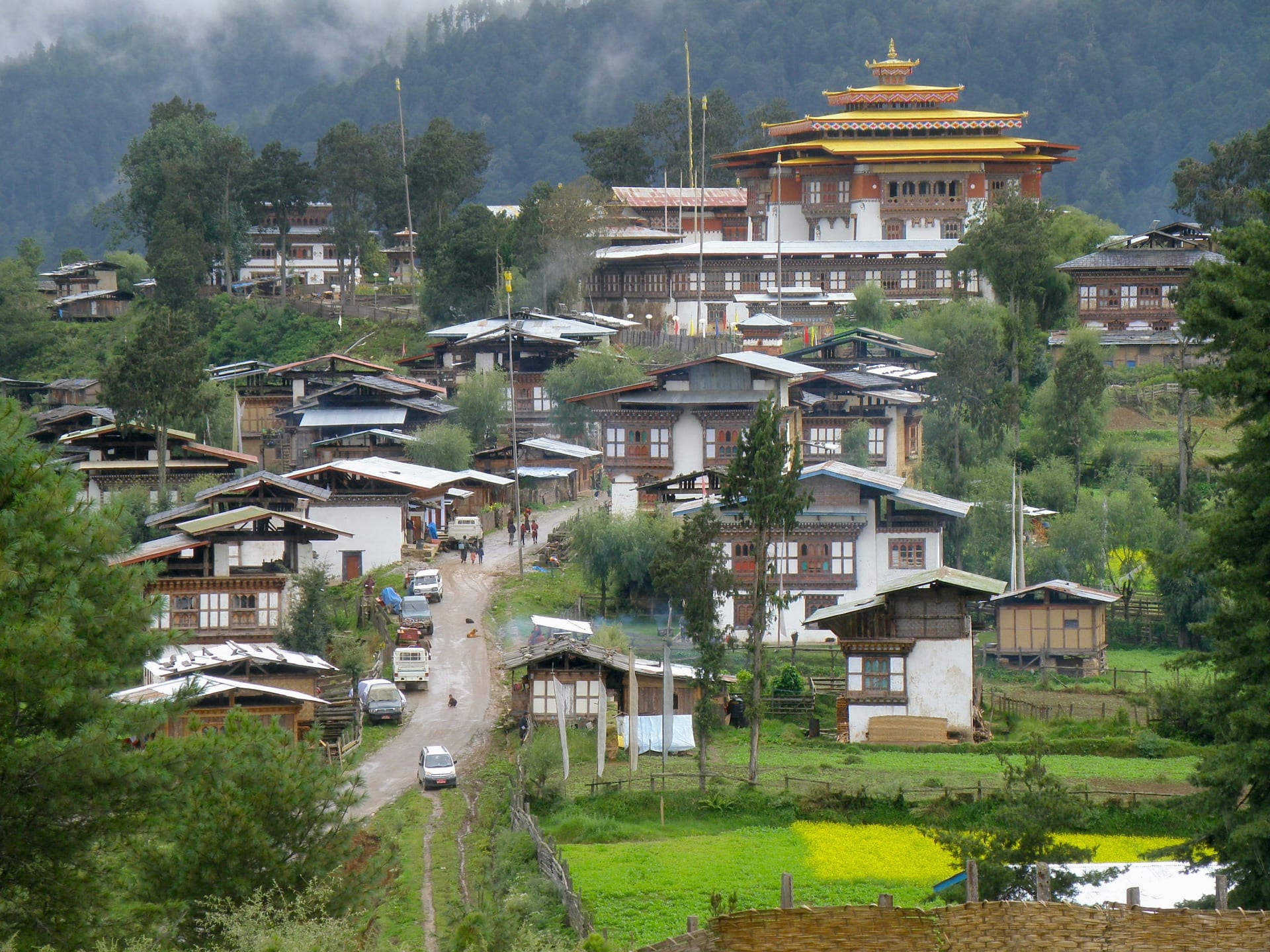
Perched on a forested hill overlooking the entire Phobjikha Valley, Gangtey Goemba is one of Bhutan’s most important Nyingmapa Buddhist monasteries. Founded in 1613 by the grandson of Pema Lingpa—the great treasure revealer whose spiritual legacy still influences Bhutanese Buddhism—the monastery follows the Peling tradition of Buddhism and houses approximately 100 monks who study, practice, and maintain the sacred traditions that have continued here for four centuries.
The monastery’s architectural highlights tell the story of Bhutanese religious building at its finest. Traditional Bhutanese design features golden roofs that catch the sunlight and seem to glow against the deep blue Himalayan sky. Beautiful views over the valley unfold from the monastery grounds—sacred geography where built environment and natural landscape merge seamlessly. Ancient statues and thangkas (painted scrolls) inside the temples depict Buddhist deities and masters who have preserved these teachings through generations of practitioners. As an active monastery with young monks studying here, visitors witness living tradition rather than museum display.
Gangtey Goemba is open daily from 8 AM to 6 PM, and modest dress is required—shoulders and knees must be covered, hats must be removed before entering temples, and shoes must be left at the entrance.
Gangtey Nature Trail
This beautiful 2.5-hour hike (approximately 5 km) ranks among Bhutan’s most rewarding walks, accessible to most visitors while still offering the sense of being in a remote mountain landscape. The trail descends from Gangtey Goemba through forests, meadows, and traditional villages before reaching the valley floor, creating a journey through both natural beauty and human community.
The trail descends through mixed forests of blue pine, bamboo, and rhododendron. In spring, rhododendrons burst into bloom—red, pink, and white blossoms that transform the forest into a living garden. The path passes traditional farmhouses with terraced fields where families grow potatoes, buckwheat, and vegetables using methods passed down through generations. Local villagers go about their daily lives along the trail, greeting hikers with warm smiles and perhaps a curious word or two in Dzongkha or English. Prayer wheels and chortens (stupas) line the route, reminders that this landscape is as sacred as it is beautiful. Spectacular views unfold throughout the hike, making it difficult to resist stopping repeatedly for photographs. And in season, black-necked cranes feed in the wetlands below, their calls drifting up through the clear mountain air.
Black-Necked Crane Information Center
This visitor center, run by the Royal Society for Protection of Nature (RSPN), provides essential context for anyone interested in understanding the valley’s famous visitors. The center offers educational exhibits about black-necked cranes—their biology, life cycle, migration patterns, and the conservation challenges they face in a changing world. Information about crane behavior and ecology helps visitors understand what they’re seeing when they watch these remarkable birds. Displays explain conservation efforts and the challenges of protecting both cranes and their habitat while supporting local communities. An observation deck with spotting scopes allows close-up views of cranes without disturbance. A gift shop sells items that support conservation efforts.
The center’s staff are passionate about crane conservation and happy to answer questions, share stories about individual cranes that return year after year, and provide tips on the best places and times to see these magnificent birds.
Kihorthang and Tabitingang Villages
These traditional villages offer a glimpse into authentic Bhutanese rural life where modernization has not overwhelmed traditional patterns of existence. Farm families have lived in these villages for generations, maintaining traditional agricultural practices and Buddhist customs while adapting selectively to modern conveniences. Walking through these villages, visitors see traditional houses built of rammed earth with intricately painted wooden windows, women weaving on backstrap looms, men working in fields using ox-drawn plows, and children walking to school along dirt paths—scenes that have changed little in centuries despite the passage of time.
The Annual Black-Necked Crane Festival
Held every November at the courtyard of Gangtey Goemba, the Black-Necked Crane Festival celebrates the arrival of the sacred cranes with cultural performances, masked dances, and educational activities that bring the community together to honor their winter visitors.
The festival features traditional cham (masked) dances performed by monks and local dancers. These sacred dances depict stories of Buddhist masters, including the subduing of demons and the triumph of wisdom over ignorance. Crane-inspired folk dances and songs celebrate the birds themselves, their annual return marking the passage of seasons in a calendar that follows natural rhythms rather than artificial divisions of time. School children perform crane-themed programs, ensuring that the younger generation understands both the ecological importance and spiritual significance of these remarkable birds. Conservation awareness activities educate visitors and locals alike about the importance of protecting crane habitat throughout their migration range. Local food and handicrafts are available, offering visitors a taste of valley life and supporting the local economy.
The festival typically lasts one full day, usually in mid-November, with exact dates varying according to the lunar calendar and the actual arrival of the cranes. It’s both a celebration and a conservation tool, bringing attention to the importance of protecting both the cranes and their habitat.
Cultural Experiences in Phobjikha
Farmhouse Stay
For the most authentic experience of Phobjikha, consider staying in a traditional farmhouse rather than a hotel. These comfortable homestays offer traditional rooms with wood-burning stoves, thick blankets for cold mountain nights, and windows that look out over fields and forests. Home-cooked Bhutanese meals feature dishes made from ingredients grown right on the farm—potatoes, greens, chili peppers, cheese from cows or yaks, and rice purchased at the weekly market. Interaction with farm families provides insights into rural Bhutanese life that no guidebook can capture. Families welcome visitors into their daily routines, their evening conversations, their celebrations of seasonal festivals, and their quiet moments of contemplation.
Traditional Hot Stone Bath
After a day of hiking through the valley, relax with a traditional Bhutanese hot stone bath (menchu). River stones are heated until red-hot in a wood fire, then placed in a wooden tub filled with water infused with medicinal herbs gathered from the surrounding forests—artemisia, juniper, rhododendron leaves, and other plants known for their healing properties. As the stones cool in the water, they release heat and mineral essences into the bath, creating a therapeutic treatment that soothes tired muscles and opens pores. The bath is believed to have medicinal properties, helping with everything from arthritis to respiratory problems to simple exhaustion.
Best Time to Visit Phobjikha
The valley offers different rewards in different seasons, and the best time to visit depends on what you hope to experience.
Crane season from November through February delivers the valley’s signature experience. This is when black-necked cranes are present, feeding in the wetlands and roosting in the marshes at night. Weather consists of cold nights that often drop below freezing, but sunny days that feel pleasantly mild. Occasional snow dusts the valley floor, creating a scene of remarkable beauty. The Black-Necked Crane Festival takes place in November. Crowds are moderate, increasing during the festival period but remaining manageable compared to major tourist destinations.
Spring from March through May brings hiking and wildflowers. Pleasant days and cool nights create ideal conditions for walking. Rhododendrons and magnolias are blooming, transforming the forests into gardens of extraordinary color. The Gangtey Trek and other hiking trails are at their best. Cranes have departed by late March or early April.
Autumn from September through October offers clear views and trekking. Skies are typically clear, making this the prime season for mountain views and photography. Temperatures are comfortable—neither too hot nor too cold. Harvest season means golden landscapes as farmers gather crops. Hiking and photography conditions are ideal.
Where to Stay in Phobjikha
Luxury options include Dewachen Hotel & Spa, which offers a beautiful location with valley views and comfortable rooms that blend traditional architecture with modern amenities. Gangtey Palace provides traditional luxury with excellent service and a long history of welcoming guests to the valley. Gangtey Lodge offers boutique accommodation with a spa that specializes in traditional Bhutanese treatments.
Mid-range options include Hidden Valley Resort, which is comfortable and well-located with easy access to both the monastery and the nature trail. Karma’s Home is a family-run guesthouse with a personal touch and warm hospitality. Yoenthen Lhakhang provides clean and basic but authentic accommodation for travelers who prioritize experience over luxury.
Getting to Phobjikha
From Thimphu, the journey covers 135 km and takes 4-5 hours via Wangdue Phodrang. The road climbs steadily from Thimphu over Dochu La Pass with its 108 chortens and spectacular Himalayan views, then descends into the warmer Wangdue Valley before climbing again into the mountains and eventually descending into Phobjikha Valley.
From Punakha, the distance is 75 km and takes 2.5-3 hours, also via Wangdue Phodrang. This is the most common route for travelers who are exploring western Bhutan.
Sample Phobjikha Itinerary (2 Days)
Day 1: Arrival & Cranes
Arrive from Punakha or Wangdue in the morning and check into your accommodation. After lunch, visit the Crane Information Center to learn about the valley’s famous visitors and understand conservation efforts. The center provides binoculars and spotting scopes, and staff can direct you to the best current viewing locations. Late afternoon provides excellent light for both photography and crane watching. End the day with sunset at a valley viewpoint, watching cranes fly to their roosting sites in the marshes as the sky turns golden and then purple behind the mountains.
Day 2: Monastery & Nature
Begin the morning with a visit to Gangtey Goemba. The morning light on the golden roofs is spectacular, and the monks are often engaged in morning prayers and ceremonies that visitors are welcome to observe respectfully. After a midday picnic lunch with valley views, spend the afternoon on the Gangtey Nature Trail, descending from the monastery through forests and villages to the valley floor. End the day with a village visit and tea at a farmhouse, where you might learn about traditional farming practices, watch women weaving, or simply sit and talk with your hosts about life in this remote and beautiful valley.
Planning Your Phobjikha Visit
Phobjikha Valley offers a Bhutan experience that is increasingly rare in our rapidly changing world. Pristine nature, authentic culture, and profound spiritual energy all converge in one place. The valley’s commitment to conservation has preserved a way of life that has existed for centuries while protecting the habitat of creatures that have been migrating here for millennia.
Whether you come for the cranes and their ancient rhythms of migration, for the hiking through forests and meadows that feel removed from modern concerns, for the culture that welcomes strangers without losing its essential character, or simply for the peace and beauty of this sacred valley, Phobjikha will touch you deeply.
The black-necked cranes that return here year after year remind us that some rhythms transcend human concerns. The farmers who work these fields using methods their grandparents and great-grandparents used remind us that not all progress requires abandoning the wisdom of the past. The monastery that has stood on this hill for four centuries reminds us that some foundations remain solid even as the world changes around them.
At Silverpine Bhutan, we’ve been guiding travelers to Phobjikha since 2010. Our local guides have deep connections to the valley and can arrange authentic experiences that go beyond typical tourist encounters—meals with farm families, meetings with crane conservationists, visits to hidden temples that most travelers never see, and opportunities to participate in seasonal activities that have defined valley life for generations.
Frequently Asked Questions About Phobjikha
When is the best time to see black-necked cranes in Phobjikha?
The cranes arrive in late October or early November and stay until late February or early March. November is ideal as you can attend the Crane Festival and see newly arrived cranes settling into their winter habitat.
Is Phobjikha suitable for all fitness levels?
The valley itself is accessible to everyone. The Gangtey Nature Trail is moderate but can be shortened or skipped depending on your interest and ability. Most attractions involve some walking, but nothing requires exceptional fitness.
How cold does Phobjikha get in winter?
Winter nights can drop below freezing, sometimes reaching -5°C or lower. Days are usually sunny and pleasant, with temperatures typically ranging from 5°C to 15°C. Hotels provide heating and warm bedding, and hot stone baths take the edge off cold evenings.
“When the cranes dance in Phobjikha, they perform an ancient prayer written in movement—a reminder that some of life’s greatest blessings arrive on wings and stay only as long as we protect them.” — Bhutanese Proverb