Trip Overview
Where History Awakens: The Punakha Tshechu & Domche Festival
The year was 1639. Tibetan forces massed at Bhutan’s northern borders, their armies threatening to overwhelm the young kingdom. From the Punakha Dzong, the great Zhabdrung Ngawang Namgyal—founder of unified Bhutan—watched and waited. What happened next would become legend, retold every February in one of the world’s most extraordinary festivals.
The Story Within the Festival
The Punakha Tshechu and Domche is unlike any other festival in Bhutan. While tshechus across the kingdom celebrate Guru Rinpoche’s deeds through sacred cham dances, Punakha Domche does something different—it reenacts history itself.
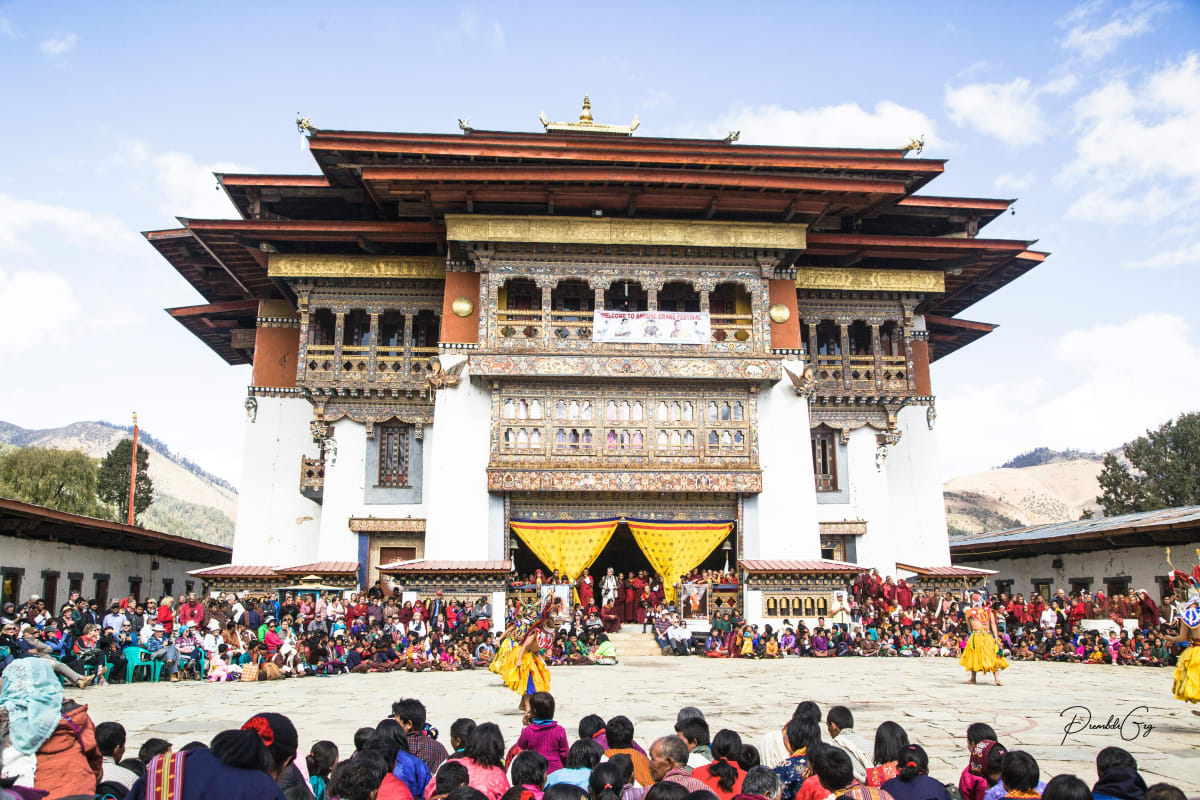
Imagine standing in the courtyard of Punakha Dzong, Bhutan’s most beautiful fortress-monastery. The February sun warms the ancient stone walls. The air fills with the deep resonance of ceremonial trumpets, the clash of cymbals, and the rhythmic beat of drums. Then come the Pazap—warriors in traditional battle dress, carrying swords and matchlock guns. They recreate the battles that saved Bhutan, performing a theatrical display that has remained unchanged for nearly four centuries.
What You’ll Witness
| The Ritual | The Story Behind It |
|---|---|
| The Serda (Great Procession) | Sacred relics of Zhabdrung Ngawang Namgyal carried in solemn procession from the dzong |
| Pazap March | Local men dressed as 17th-century warriors, recreating Bhutanese defense forces |
| Tibetan Invasion Reenactment | Dramatic theatrical performance of the 1639-1643 conflict and Bhutanese victory |
| Zhana Cham (Black Hat Dance) | Sacred dance performed by monks to purify the ground and destroy negativity |
| Pema Lingpa Relics Display | Sacred treasures revealed by the famous treasure revealer, rarely seen by the public |
| Mewang (Fire Ceremony) | Ritual burning of effigies, symbolizing destruction of obstacles and evil spirits |
The Dzong: Stage of Legends
Punakha Dzong, the “Palace of Great Happiness,” is more than a venue—it is itself a character in this story. Built in 1637 at the confluence of two rivers, the Pho Chhu (Father) and Mo Chhu (Mother), this six-story masterpiece has witnessed:
- The coronation of Bhutan’s first king in 1907
- The royal wedding of the present King and Queen in 2011
- Nearly 400 years of uninterrupted sacred practice
During the festival, the dzong comes alive. Monks in elaborate brocade robes perform ceremonies that have been passed down for generations. Locals arrive in their finest ghos and kiras, carrying picnics and children on their backs. The atmosphere is both solemn and joyous—a celebration of faith, history, and identity.
Your Journey to the Festival
Day-by-Day Story
| Day | Chapter | What Unfolds |
|---|---|---|
| Feb 16 | Arrival | Touch down in Paro, where the Himalayas welcome you with crisp mountain air. Traditional khata scarf ceremony. Drive to Thimphu, Bhutan’s capital. |
| Feb 17 | Thimphu | Explore the capital—Tashichho Dzong seat of government, the golden Buddha Point, the takin preserve. Evening briefing on festival history. |
| Feb 18 | The Mountain Crossing | Drive over Dochula Pass (3,150m) where 108 chortens guard the mountain. Snow-capped peaks stretch before you. Descend into warm Punakha Valley. |
| Feb 19 | Dzong Discovery | Private tour of Punakha Dzong. Walk the suspension bridge. Evening festival briefing under the stars. |
| Feb 20 | The Festival Begins | First day of Punakha Tshechu. Opening ceremonies, sacred cham dances, masked performers tell stories through movement. |
| Feb 21 | The Main Event | Punakha Domche—culmination. The Serda procession with Zhabdrung’s relics. The dramatic invasion reenactment. Warriors charge, history comes alive. |
| Feb 22 | Sacred Dances | Zhana Cham (Black Hat dance) purifies the ground. Final ceremonies. The giant thongdrel is unfurled—sacred textile believed to confer blessings by sight alone. |
| Feb 23 | Journey Homeward | Drive back to Paro via Thimphu. Last views of mountains. Farewell dinner. |
| Feb 24 | Paro’s Treasures | National Museum, Kyichu Lhakhang (one of Bhutan’s oldest temples), archery demonstration. |
| Feb 25 | Departure | Final breakfast. Transfer to airport. Tashi delek—safe journey, with blessings of the festival in your heart. |
Why This Festival Matters
In a world where ancient traditions fade into commercialized performances, the Punakha Domche remains startlingly authentic. The Pazap warriors are not professional actors—they are farmers, shopkeepers, civil servants who volunteer for this honor. Their grandfathers and great-grandfathers performed the same roles. The costumes they wear are family heirlooms, preserved and passed down.
The festival is not performed for tourists. It existed for centuries before the first foreign visitors arrived. You are witnessing something real, a living connection to Bhutan’s survival as a nation and its unwavering commitment to preserving what makes it unique.
“When I first saw the Pazap warriors march, I felt goosebumps. These men weren’t performing—they were channeling their ancestors. The past wasn’t being remembered. It was being re-lived.”
Practical Details
Festival Dates 2026
| Date | Significance |
|---|---|
| February 16 | Arrival day in Paro |
| February 17-18 | Thimphu exploration, journey to Punakha |
| February 19 | Punakha Tshechu — Opening ceremonies and cham dances |
| February 20 | Punakha Domche — Main festival day |
| February 21 | Final ceremonies, Black Hat dance, thongdrel unfurling |
| February 22-24 | Return journey via Thimphu to Paro |
| February 25 | Departure |
What’s Included
| Inclusions | What It Means for You |
|---|---|
| 9 nights premium accommodation | Comfortable 3-4 star hotels with Bhutanese character |
| All meals | Full board—experience Bhutanese cuisine from ema datshi to momos |
| Expert English-speaking guide | Buddhist practitioner who explains every ritual’s significance |
| Private vehicle | Comfortable transportation, mountain roads handled professionally |
| Festival access | Reserved viewing spots at Punakha Dzong |
| All permits & fees | Visa, SDF, entrance fees—all handled seamlessly |
| Unlimited water | Stay hydrated in high-altitude air |
| Festival souvenir package | Take home memories of this unique experience |
Pricing & Availability
| Detail | Information |
|---|---|
| Price | $3,400 per person |
| Single supplement | $700 |
| Deposit | 30% ($1,020) due within 7 days of booking |
| Balance due | 30 days before departure |
| Current bookings | 0 guests |
| Spots available | 12 spots |
| Group size | 6-16 guests (small, intimate experience) |
| Child discount | 10% off for children under 12 |
Booking & Cancellation
| Timeline | Policy |
|---|---|
| 60+ days before departure | Full refund |
| 30-59 days before departure | 50% refund |
| Within 30 days | No refund |
| Minimum to guarantee | 6 guests (only 6 more needed!) |
What to Pack
| Essential | Why |
|---|---|
| Valid passport | Must have 6 months validity |
| Comfortable walking shoes | Temple visits, dzong exploration |
| Modest clothing | Shoulders and knees covered for sacred sites |
| Light layers | February mornings are cool, days pleasant |
| Sun protection | High altitude means strong UV |
| Camera + extra batteries | Cold drains batteries faster |
| Small daypack | For daily essentials, water, festival guide |
The Promise of This Journey
The Punakha Tshechu and Domche is more than a tour—it’s an invitation to step into a living story. You won’t just see Bhutan; you’ll feel it. You’ll understand why this tiny kingdom guarded its traditions so fiercely, why its people wear national dress every day, why monks still chant prayers that have echoed for centuries.
In the courtyard of Punakha Dzong, surrounded by the sound of ancient rituals and the sight of warriors channeling their ancestors, something shifts. You realize you’re not just watching history—you’re becoming part of its continuity.
February 2026. The dzong awaits. The warriors will march. The story continues.
Will you be there to witness it?
“Some festivals are performances for outsiders. Punakha Domche is a promise kept—a vow repeated across generations, remembering who we are by reliving how we survived.”
Current Status: 12 spots available | Only 6 guests needed to guarantee departure
Secure your place before this journey fills. Some stories are worth witnessing in person.
Punakha Tshechu
Experience one of Bhutan's most sacred festivals. Witness mask dances, receive blessings, and immerse yourself in centuries-old Buddhist traditions.
Daily Itinerary
Day 1: Arrival in Paro
Arrive at Paro International Airport. Your guide will greet you with a traditional khata scarf. Transfer to Thimphu (1 hour drive). Evening stroll through Thimphu town.
Day 2: Thimphu Valley Exploration
Visit Tashichho Dzong, Memorial Chorten, Buddha Point, and Takin Reserve. Traditional weaving center visit.
Day 3: Drive to Punakha via Dochula Pass
Scenic drive over Dochula Pass (3,150m) with 108 chortens. Visit Chimi Lhakhang (Divine Madman's temple).
Day 4: Punakha Dzong Exploration
Private tour of Punakha Dzong (Bhutan's most beautiful fortress). Visit Punakha Suspension Bridge. Evening briefing about the festival.
Day 5: Punakha Tshechu - Day 1
First day of the festival! Witness the opening ceremonies and traditional cham dances in the Punakha Dzong courtyard.
Day 6: Punakha Domche - Day 2
Main festival day featuring the dramatic reenactment of the 17th-century Tibetan invasion. The Serda (great procession) with Zhabdrung's relics.
Day 7: Punakha Tshechu - Day 3
Final day of the festival with the Zhana Cham (Black Hat dance) and concluding ceremonies.
Day 8: Return to Paro via Thimphu
Drive back to Paro via Thimphu. Evening at leisure in Paro town.
Day 9: Paro Valley Exploration
Visit Ta Dzong (National Museum), Kyichu Lhakhang (one of Bhutan's oldest temples), and local archery demonstration.
Day 10: Departure
Final breakfast and transfer to Paro International Airport for your flight home. Tashi delek (safe journey)!
What's Included & Not
Included
- 9 nights accommodation in premium 3-4 star hotels
- All meals as specified (B=Breakfast, L=Lunch, D=Dinner)
- Experienced English-speaking Buddhist guide
- Private vehicle with professional driver
- Festival viewing at Punakha Dzong
- All entrance fees and permits
- Bhutan Tourism Visa Fee ($100 per day)
- Bhutan Sustainable Development Fee ($100 per day)
- Unlimited bottled water
- Festival souvenir package
Not Included
- International airfare to/from Bhutan
- Travel insurance (mandatory)
- Personal expenses and tips
- Alcoholic beverages
- Optional activities not mentioned
- Visa fees for countries requiring Bhutan visa