

Festivals
Tamshing Phala Choepa: The Saint Who Painted the Walls
Inside Tamshing Lhakhang and the autumn Phala Choepa — Pema Lingpa's temple of 1501, the murals he painted, and a September and October festival that still belongs to Bhutan's great treasure revealer.
Inside Tamshing Lhakhang and the autumn Phala Choepa — Pema Lingpa's temple of 1501, the murals he painted, and a September and October festival that still belongs to Bhutan's great treasure revealer.
In this story
A festival stay is about USD 1,100 per person. Ten private days for two is about USD 2,600–2,700 per person. The fee is included.
Tamshing Phala Choepa: The Saint Who Painted the Walls
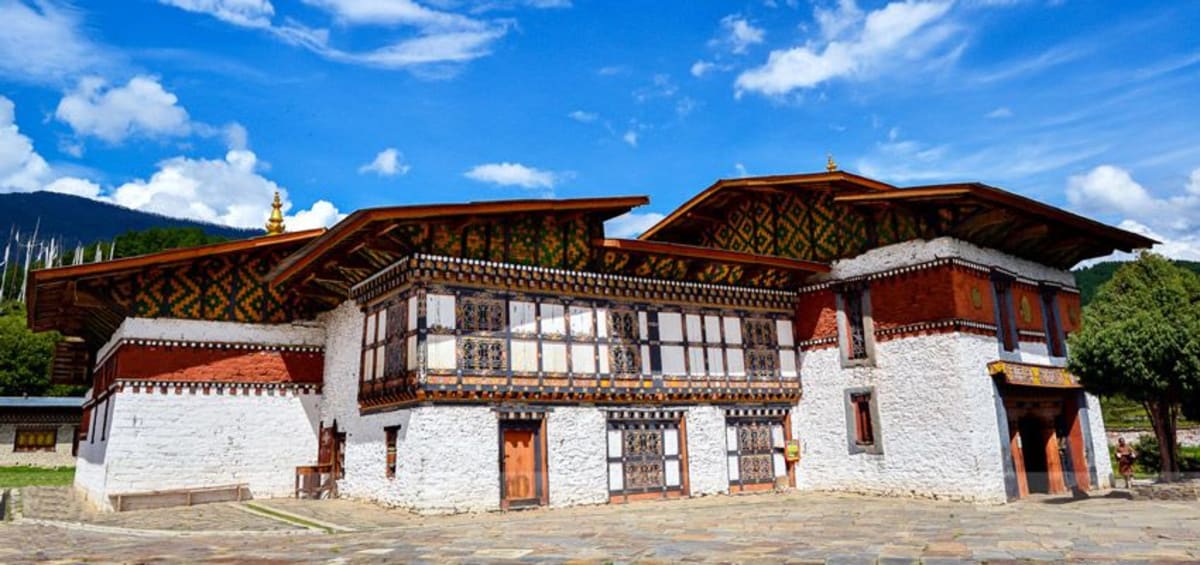
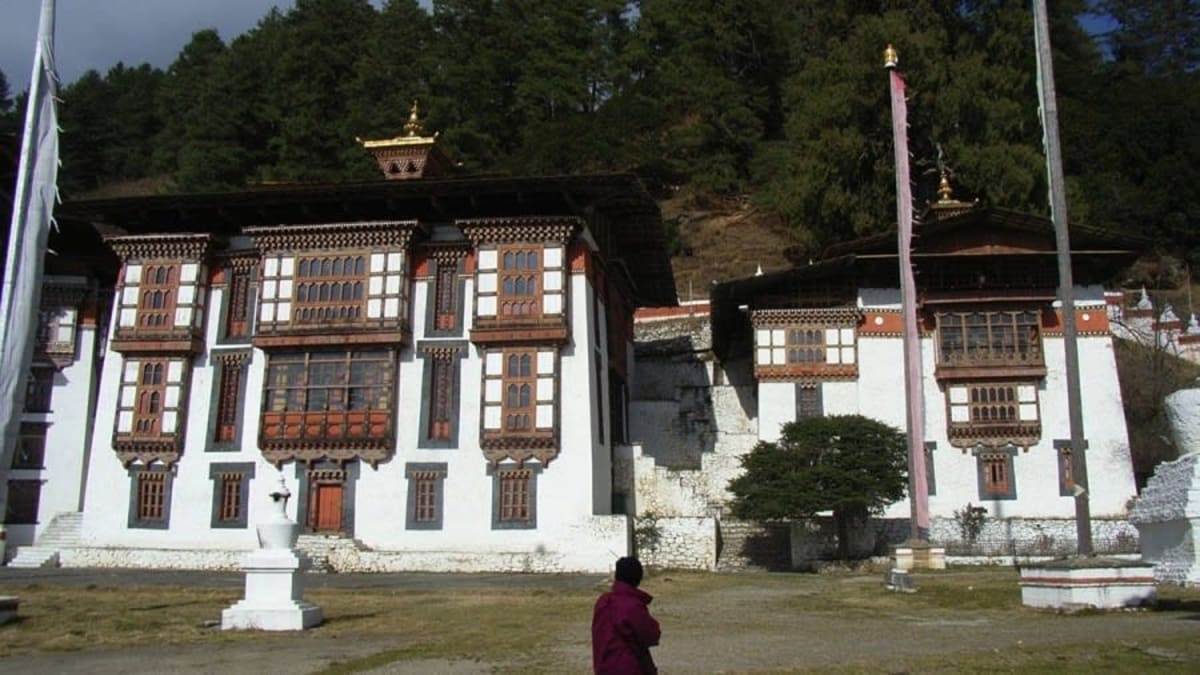
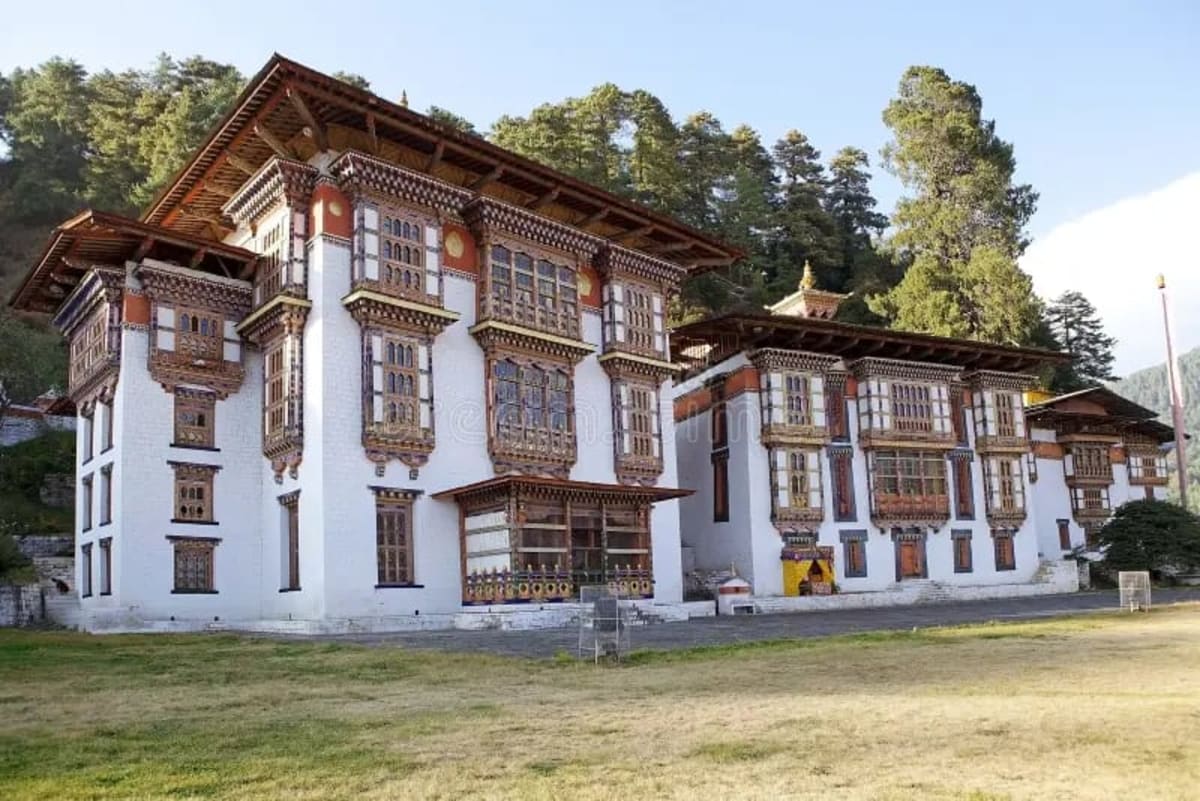
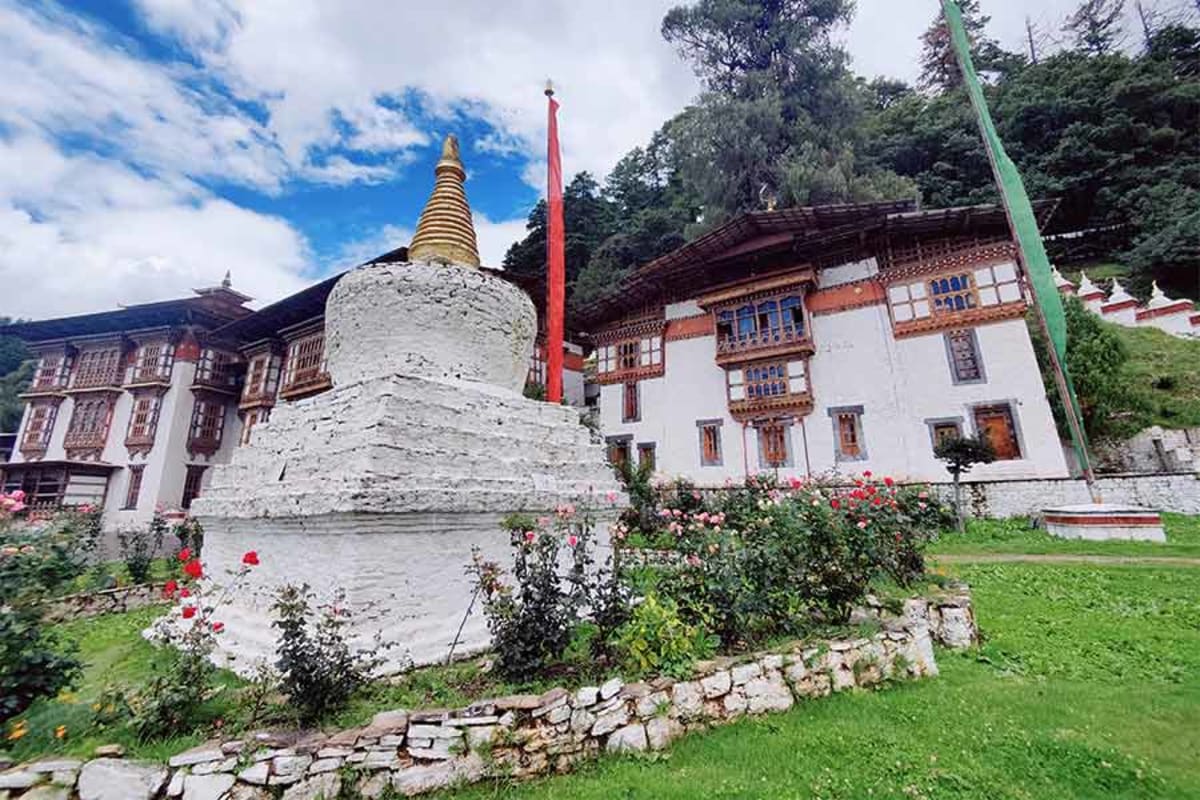
The courtyard is smaller than you expect. That is the first correction Tamshing makes. You have come from Kurjey, perhaps, where the hillside is a complex of kings and queens and cypress, and you cross the Chamkhar Chu to a temple that looks, from the path, almost modest — white walls, a wooden gallery, young monks in maroon moving like a single organism between kitchen and shrine. Then you step inside, and the sixteenth century looks back at you.
Pema Lingpa painted these walls. Not a workshop in his name. The man himself, the terton, the treasure revealer who dove into Mebar Tsho with a butter lamp and came up with the lamp still burning. The pigments have faded in the way living things fade, which is different from the way reproductions fade. Eyes in the murals have been watching this courtyard since 1501. During Phala Choepa, in the autumn, those eyes watch dancers as well.
The man who found what had been hidden
To understand the festival you have to understand the founder, and to understand Pema Lingpa you have to stand at the Burning Lake, even if only in the mind. Guru Rinpoche, the tradition says, hid teachings, statues, and practices throughout the Himalaya for a darker age that would need them. A terton is not an archaeologist. He is a person whose realization matches a concealment, so that what was hidden can come back into use without being merely dug up. In the late fifteenth century a man from this region — Bumthang’s own son — began to find what the Lotus-Born had left.
The most famous finding is the lake. Pema Lingpa took a lamp into the water in front of a skeptical crowd and returned with treasures and a flame that had not gone out. That story is told until it is almost a proverb. What is told less often, outside Bumthang, is that he then built. Tamshing Lhundrup Choling, in 1501, was not a monument to his fame. It was a place to house a living current: statues, texts, a community of practice, and walls he covered with the deities of the cycle he had recovered. He is said to have forged, by means the stories call miraculous, an iron chain-mail coat that monks and pilgrims still wear to circumambulate the temple, the metal clicking softly, a burden that is also a blessing. I have watched a teenage monk put it on, grimace, laugh, and walk. Five centuries of footsteps in the same small circuit.
Pema Lingpa’s bloodline matters in Bhutan in a way visitors sometimes miss. The royal family traces ancestry through him. Nyingma houses across the country, including Gangtey in Phobjikha, look back to his grandson and his treasures. Tamshing is not a side chapel. It is one of the root addresses of the Bhutanese spiritual imagination. When the Phala Choepa is danced here, the valley is not borrowing a tshechu format from the dzongs. It is keeping a family anniversary.
Autumn in a painted room
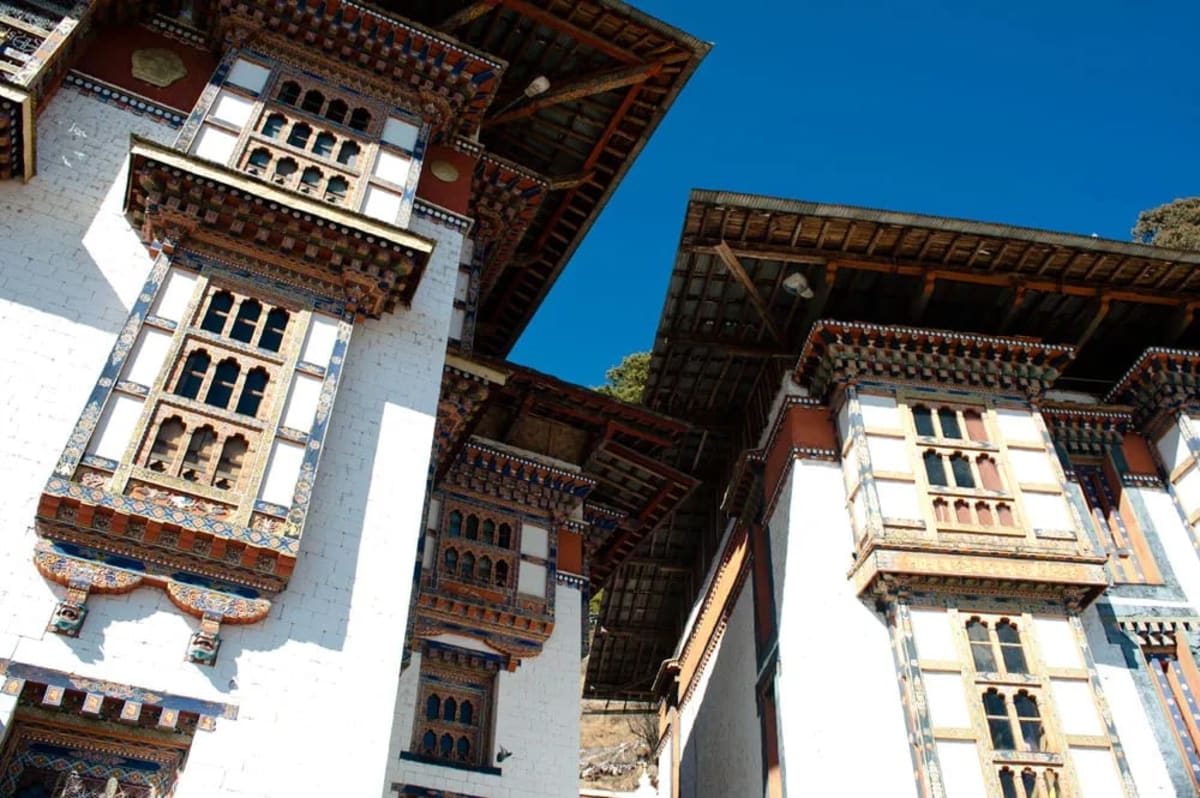
September and October in Bumthang are the months of clarity. The monsoon has washed the sky. Buckwheat rusts. The air has an edge in the morning and a kindness at noon. Phala Choepa falls in this weather, on dates tied to the eighth Bhutanese month, and the small courtyard fills without ever becoming a stadium. That is the gift of Tamshing. You are close enough to see a dancer’s feet find the old marks in the flagstones. You are close enough to hear a khenpo’s cough between cymbal strokes.
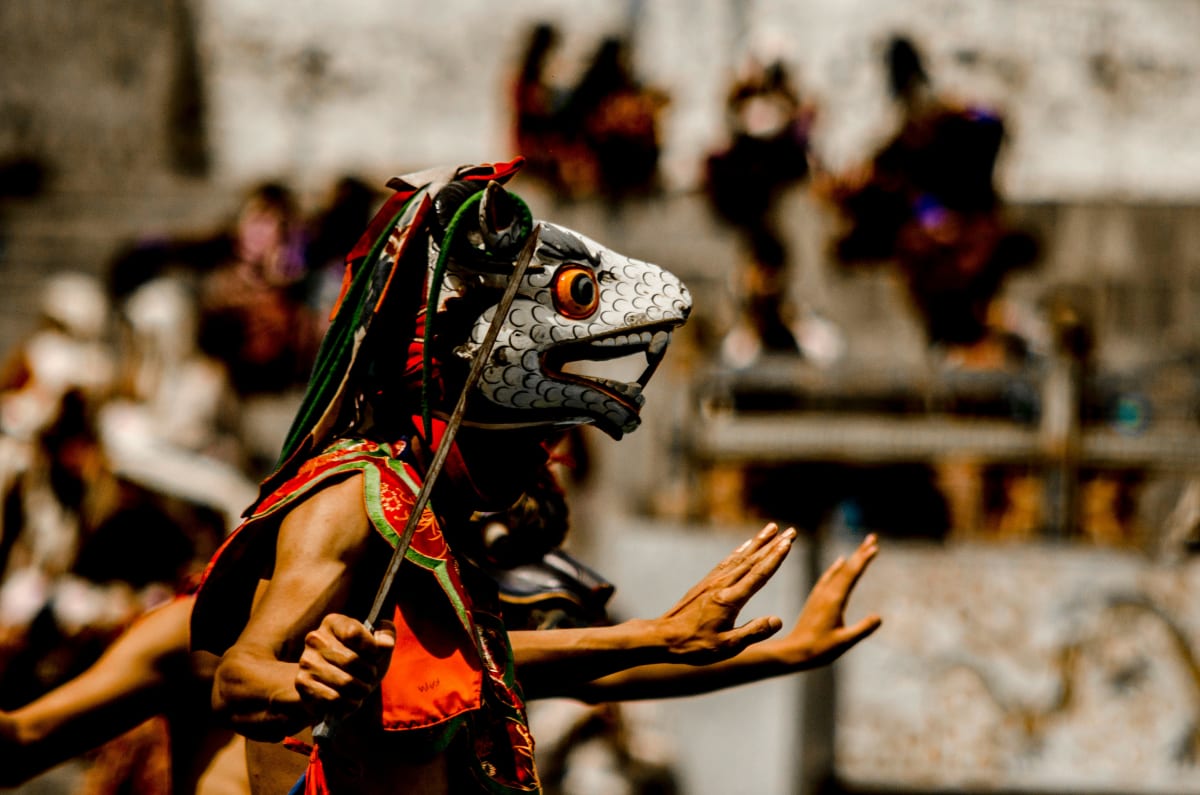
The dances honor the Guru and the terton’s revelations. Offerings are made in the slow, gorgeous grammar of cham — scarves, torma, the turning of wrathful and peaceful forms. I have stood in this courtyard when a dancer representing one of Padmasambhava’s manifestations paused, and behind his mask the mural of the same deity was visible on the wall, a conversation between paint and silk, between 1501 and this afternoon. The young monks watch with the particular attention of boys who will, some of them, wear those masks in years to come. Their laughter in the kitchen doorway is part of the festival. Tamshing is a working monastery, not a museum that opens for a long weekend.
Inside, when the crowd allows, I take people into the gloom of the assembly hall and let their eyes adjust. The murals are not bright. They are better than bright. Flesh tones, wrathful haloes, horses, offerings, the crowded heaven of a Nyingma vision — all of it applied by a hand that also knew how to dive, how to forge, how to found. Conservationists worry, as they should. Photographers are often asked to stop, as they should. What you are looking at is not decoration. It is a teaching that was mixed in bowls and put on plaster so that people who could not read a terma text could still receive it.
If you are invited to wear the iron coat, the walk around the temple is shorter in distance than it feels. The links rest on the shoulders with a seriousness that is almost comic until it is not. Each step clicks. You are, for a few minutes, inside a relic that a saint is said to have made with his own hands, and the courtyard noise goes thin. I do not tell guests what they should feel. I tell them to notice the weight, and then to notice the relief when it comes off, and then to ask whether those two sensations are so different from what a festival is for: to carry something, together, and to set it down again.
A festival that fits in a courtyard
There is a temptation, in writing about Bhutanese festivals, to make every one sound like the largest. Phala Choepa refuses that. The scale is the meaning. Grandmothers sit on the wooden gallery with their legs tucked, sharing dried cheese. A man from the village across the river has brought his whole household, because this is their temple in a way the dzong can never be. The atsaras have less room to run, so their jokes are closer, more personal. When a mask of the Guru receives offerings, the line of devotees is not a tourist queue. It is a neighborhood.
I remember a late afternoon when the light came in under the eaves and laid a gold bar across the courtyard dust. A dancer had just finished. Sweat darkened the silk at his collar. He bowed toward the main shrine, toward Pema Lingpa’s presence, and a small boy imitated the bow with perfect seriousness until his friends pulled him into a game. That is Tamshing: the saint on the wall, the child in the dust, the river you can hear if the drums rest. Across the water Kurjey’s cypresses are black against the hill, the imprint of the Lotus-Born facing the temple of the man who found the Lotus-Born’s treasures. Bumthang’s spiritual geography is a sentence with two banks.
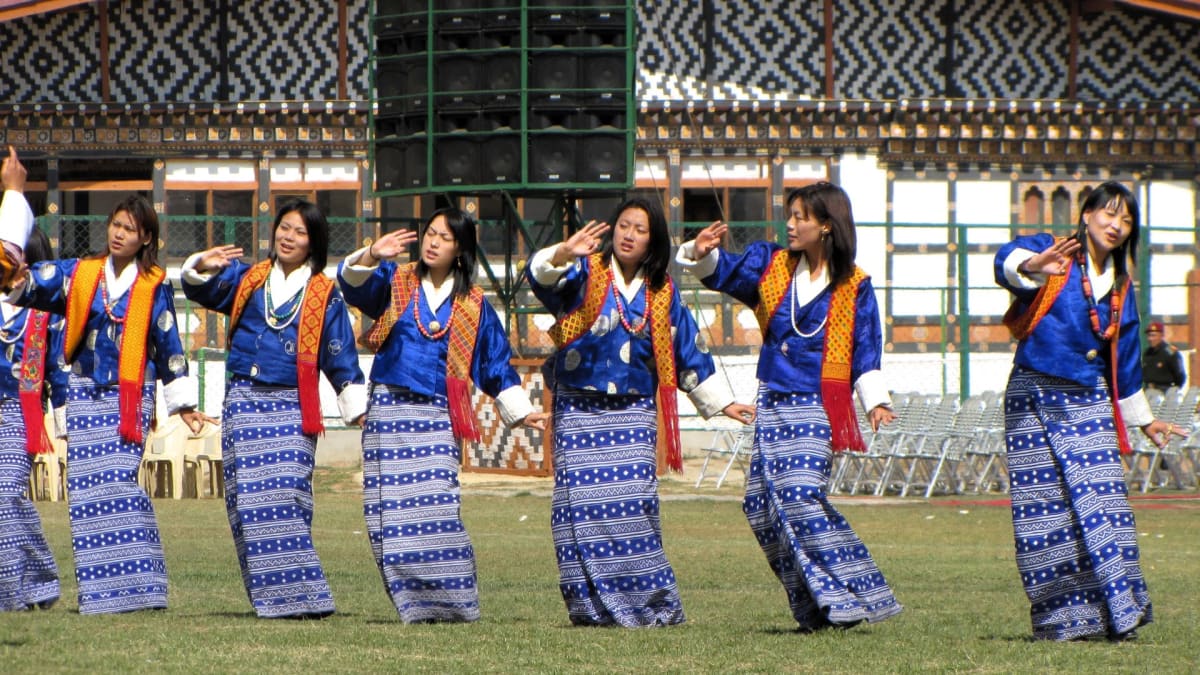
When the last cymbal dies, the courtyard smells of butter and dust and the faint metallic memory of the chain-mail coat. Monks sweep. Visitors who understand the place do not rush to the car. They walk around the temple once more, clockwise, perhaps wearing the iron if they are invited, and they look at the walls as one looks at a face one is trying to remember for a long winter. Pema Lingpa is not a legend at Tamshing. He is a landlord. The festival is rent paid in dance.
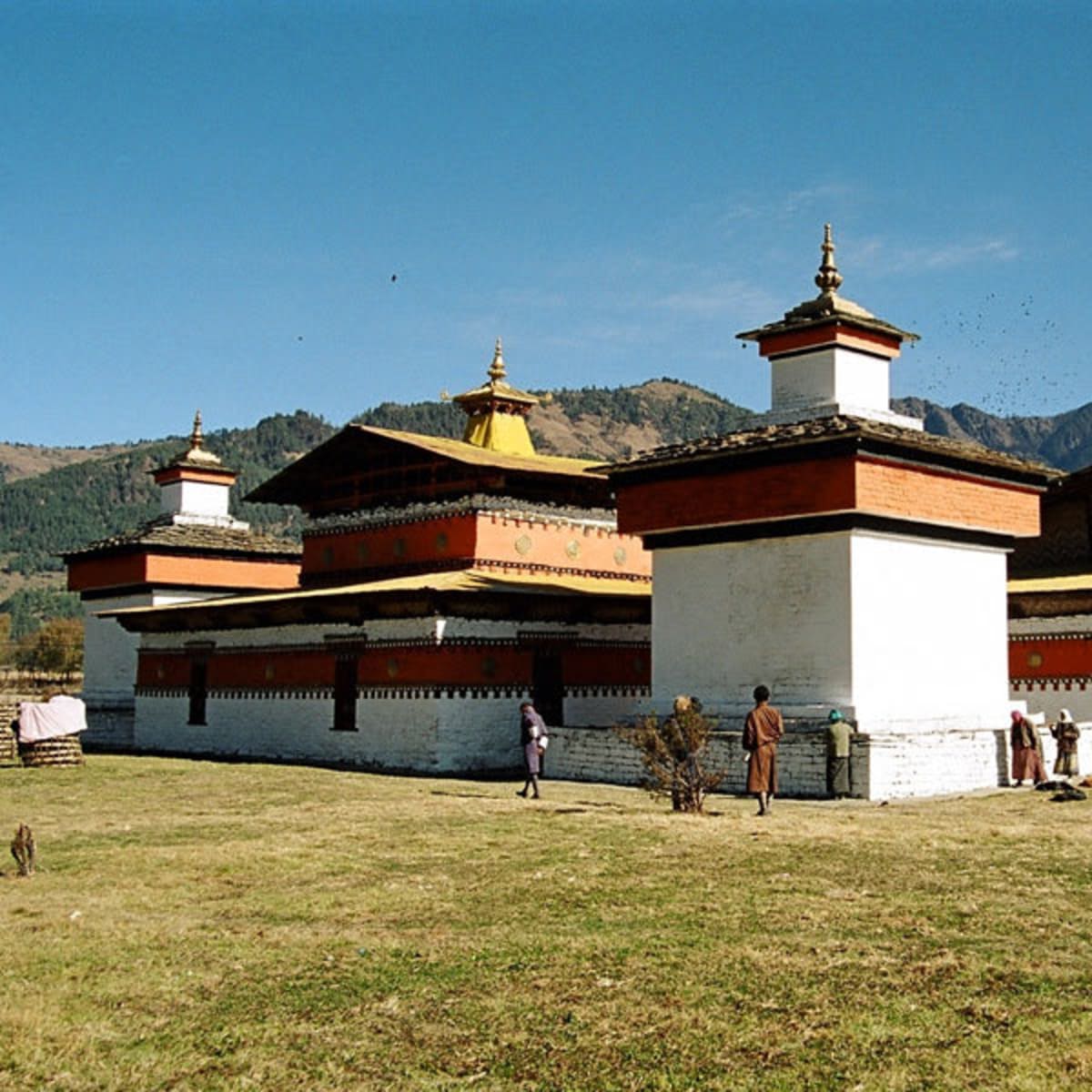
Phala Choepa is held in September or October, a few days whose exact dates follow the lunar calendar, at Tamshing Lhakhang on the side of the Chamkhar Chu opposite Kurjey, a short drive from Jakar. Give it a full day if you can: morning in the painted halls before the crowd thickens, afternoon in the courtyard for cham, and the patience to be told no when you lift a camera toward a mural. Foreign travelers come with a licensed Bhutanese operator, which is both the law of the kingdom and a kindness — a good guide will keep you from treating this small, ferociously alive temple as a stop between more famous ones. The saint who painted the walls is still, in the only way that matters here, at home. Autumn is when the house opens its courtyard and asks the valley to remember who built it.
Send your dates
A festival stay is about USD 1,100 per person. Ten private days for two is about USD 2,600–2,700 per person. The fee is included.